For a straightforward prototype, an online manufacturing platform can make quoting and iteration convenient. A drawing-intensive or repeat-production part may benefit from a named factory that can explain its setup, finishing and inspection route. A specialist shop may be the better first call when one feature or material dominates the risk. The right route is not the one with the fastest headline quote; it is the one that can take responsibility for your drawing revision, critical characteristics and delivery scope.
This guide compares sourcing routes, not six suppliers. For a dated supplier shortlist, see six CNC machining service suppliers to evaluate. No route is automatically more accurate, confidential or economical for every part.
Start with the part's decision risk
Before selecting a vendor, divide the requirement into four questions. First, is the model enough to price the part, or does a drawing carry essential datums, tolerances, threads, surface treatment and inspection notes? Second, how many orientations, workholding changes and outside processes are likely? Third, what evidence must accompany acceptance? Fourth, who is authorized to resolve a drawing conflict or approve a process change?
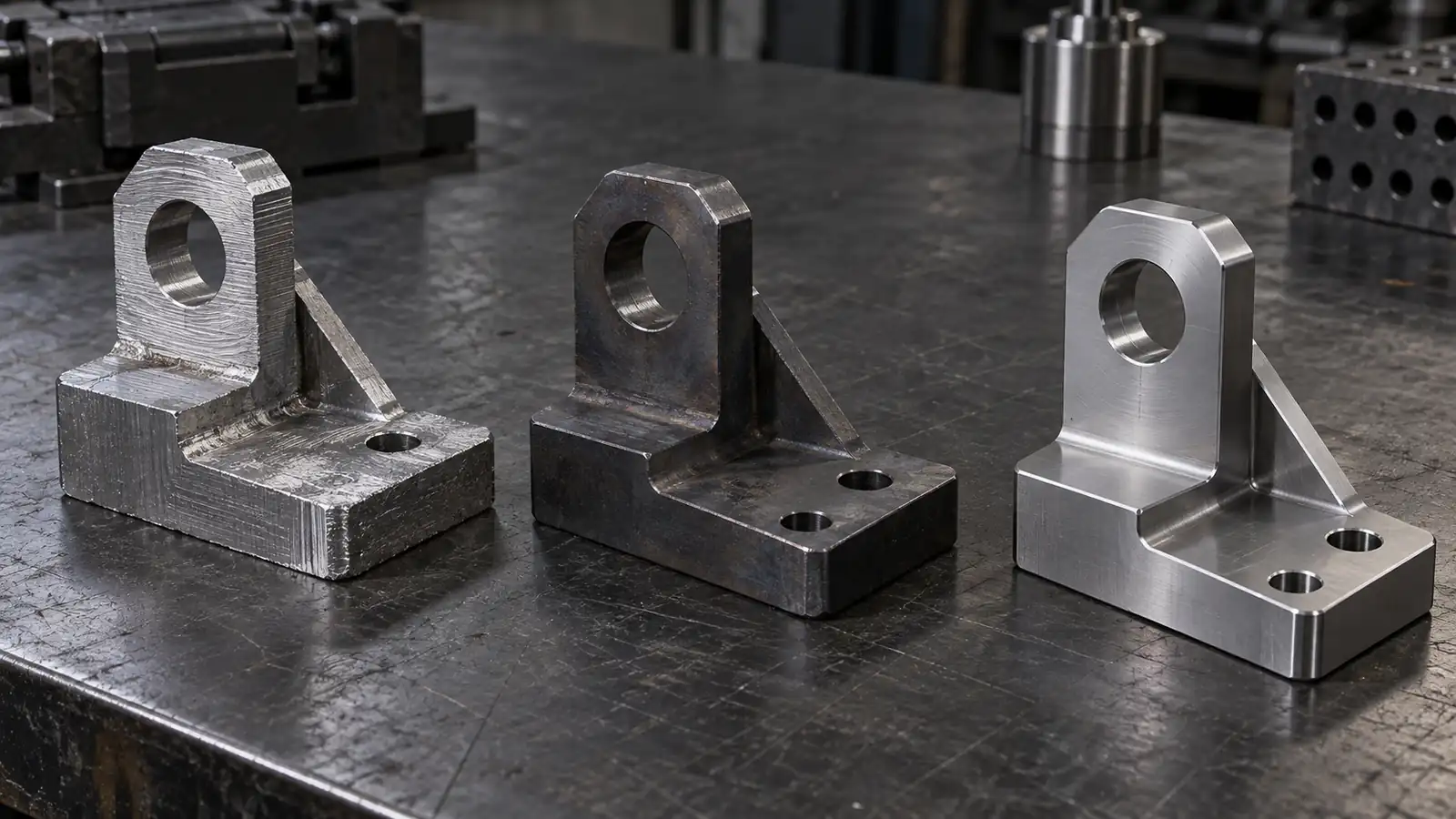
A single uncomplicated aluminum spacer with a general tolerance can be compared through a standard online quote. A multi-face housing with a bore relationship, masked anodizing and inspection report should be reviewed as a controlled manufacturing route. These are hypothetical examples, not claims about a particular provider or JIZAO job.
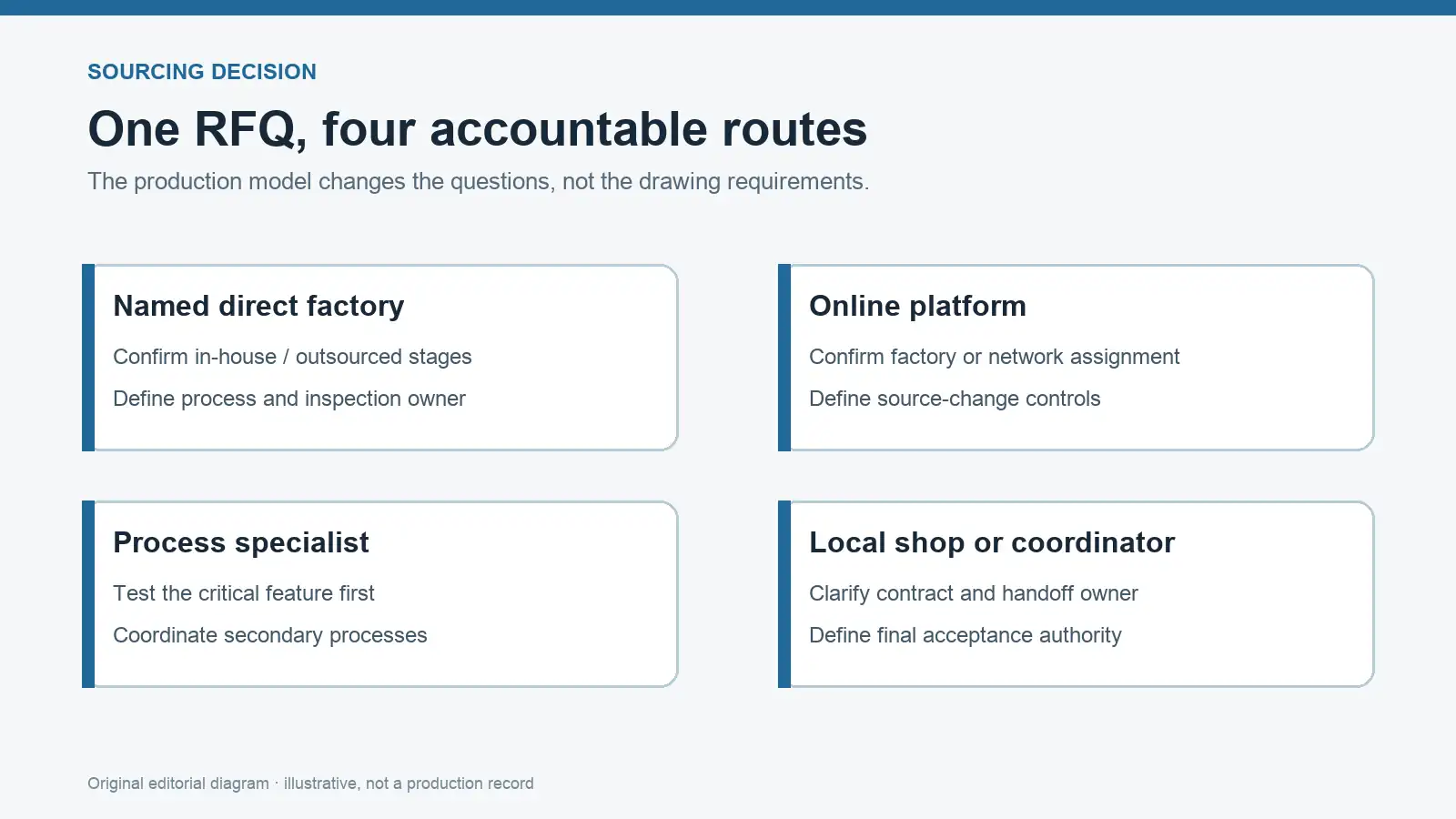
Four routes to a CNC quote
A named direct factory
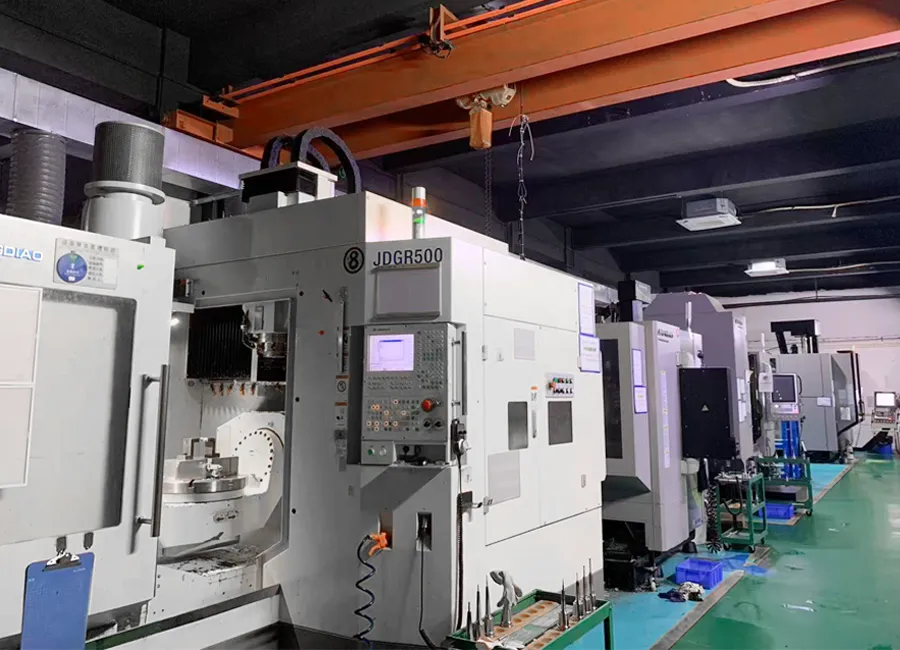
You speak with a workshop or manufacturer identified in the quote. This can shorten engineering handoffs if the same team owns process planning, machining, measurement and corrective action. It is particularly useful when critical features need setup and inspection discussion before pricing. But “direct” does not guarantee every operation is in-house: heat treatment, finishing, specialist grinding or testing may still be subcontracted. Ask the factory to identify those steps and the party responsible for final release.
An on-demand manufacturing platform
You upload CAD and specify material, quantity, finish and delivery options through a digital interface. Some services combine their own factories with a partner network; others coordinate independent shops. For example, Protolabs describes distinct factory and network CNC routes, while Xometry describes a managed supplier-network service. These are company descriptions, not an independent audit or a prediction for your part.
The platform can reduce administrative work for common configurations. An automated estimate is not a final acceptance plan. Ask which drawing requirements were read by a human, where the part will be made, whether a production source can change between orders, and how nonconformances are handled.
A process specialist
A specialist may focus on a demanding material, thin wall, large envelope, precision bore or complex multi-axis access. The narrower process knowledge can be valuable when one feature controls the whole job. The trade-off is that you may need to coordinate finishing, assembly or logistics yourself. Verify the shop's actual process and measurement route for the quoted geometry, rather than inferring it from a machine list.
A local job shop or distributor-led route
A nearby job shop can simplify visits, rapid engineering feedback and a local logistics chain. A sourcing agent or distributor can coordinate several processes and a single purchase order. Neither model proves lower total cost. Clarify who owns the drawing, who is allowed to move work, and what happens if the first article fails.
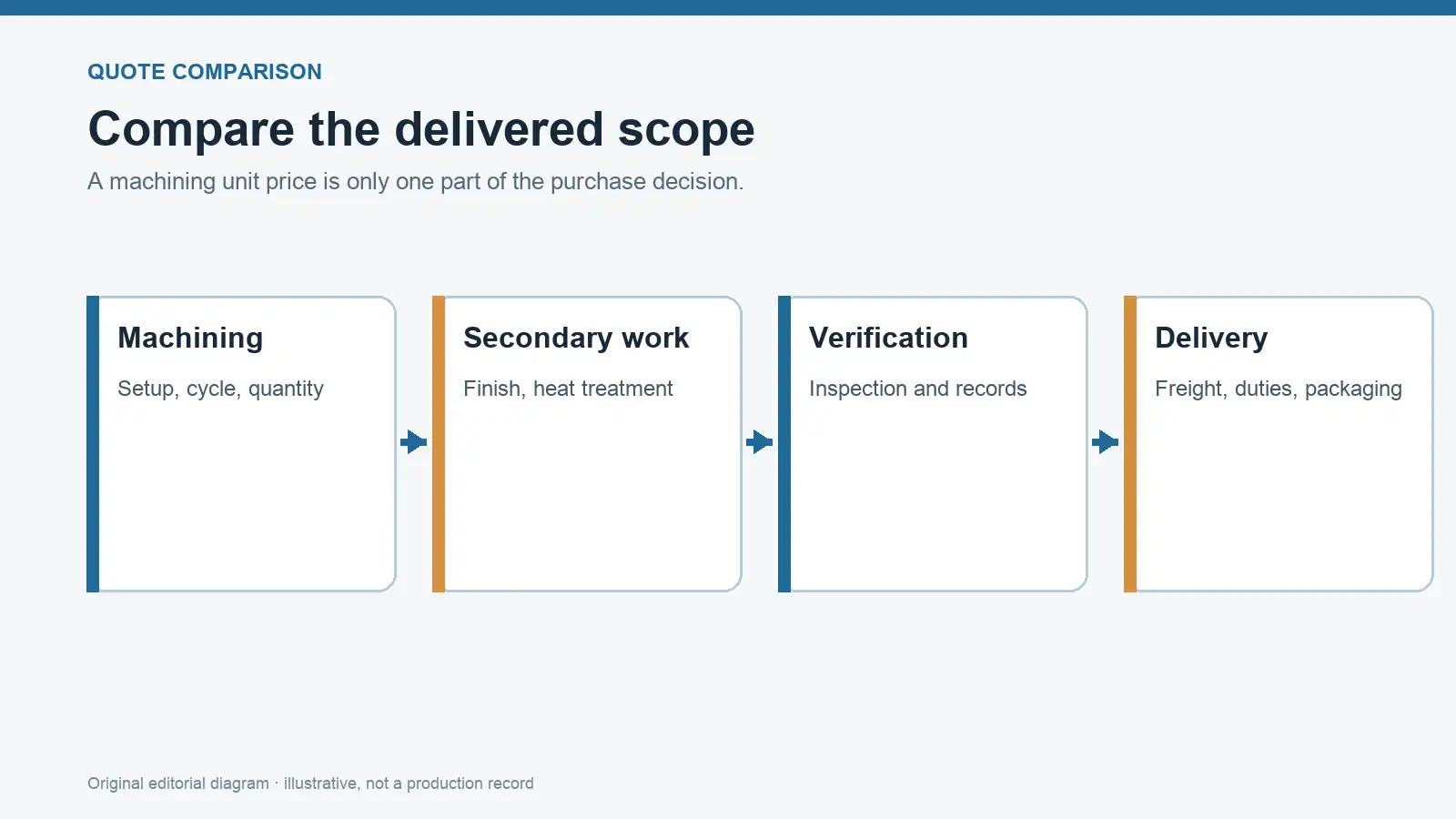
Compare like-for-like RFQs, not headline prices
Send the same revision-controlled STEP model and PDF drawing to every candidate. Identify alloy and temper, quantity, critical dimensions, datum references, thread notes, finish state, cosmetic expectations, packaging, delivery destination and required certificates or inspection records. If a critical requirement appears only in email, put it in the controlled quote package. Our STEP-and-PDF drawing guide explains why the two files answer different questions.
Request an itemized scope when comparison matters: machining, finishing, inspection, tooling or NRE, freight and duties. A cheaper machining line can become the more expensive route if secondary processing, rework, expediting or documentation is omitted. Conversely, extra documentation can be needless cost for a noncritical fit-check prototype. Total cost is a decision framework, not a universal formula.
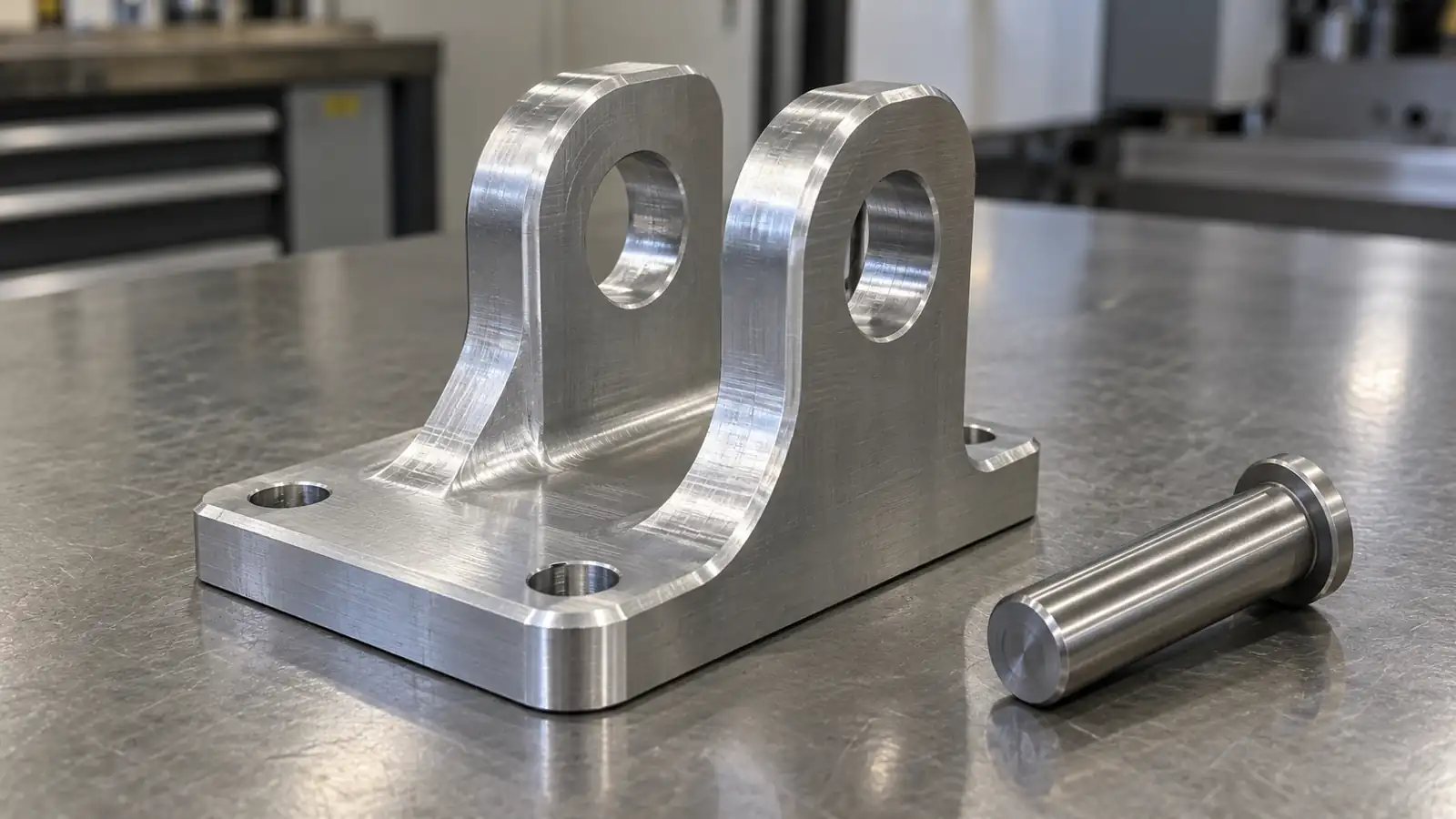
For complex geometry, ask which faces are produced in each setup, what must be relocated, and how a critical feature relationship will be measured. More axes are not automatically a better process. The most useful answer is a credible sequence tied to the drawing, not a marketing label. See 3+2 versus simultaneous five-axis machining for that distinction.
Check confidentiality and control before uploading CAD
A file upload can expose more than the visible shape: drawings may include customer names, part numbers, proprietary interfaces and notes. Review the provider's actual terms, NDA process, data-access controls, permitted subcontracting and retention policy before uploading sensitive files. Do not treat a padlock icon or generic “secure upload” line as a substitute for the agreement your organization needs. If confidentiality requirements are stringent, use your approved disclosure process and share only the revision and data necessary for the quote.
Ownership of decisions is equally important. Ask who may accept a deviation, change a material source, move production, substitute a finishing route or close a measurement discrepancy. Put the answer in the purchase order or quality agreement where the risk warrants it. Our quality-agreement checklist addresses this for complex work.
A practical selection matrix
| Part situation | Sensible first route | Verify before ordering |
|---|---|---|
| Simple prototype; common material; modest drawing burden | Online platform or local shop | Is the displayed price inclusive of finish, inspection and shipping? |
| Tight relationship across several faces | Named factory or proven specialist; platform only with explicit engineering review | Setup transfer, datum strategy and inspection evidence |
| Multi-process development program | Managed platform, distributor or factory with named subcontract-control owner | Who owns each handoff and final acceptance? |
| Repeat production with controlled revisions | Any route with a documented repeat-order control plan | Source continuity, revision approval and first-article scope |
| Sensitive design or restricted data | Organization-approved supplier path | NDA, access, permitted subcontracting and retention |
This is a decision aid, not a statement that any named provider is suitable for an individual part. A controlled drawing and an actual quote response decide that.
Ask these seven questions before award
- Who is the contracting party, and where will machining and secondary processing occur?
- Which drawing revision and model revision were quoted?
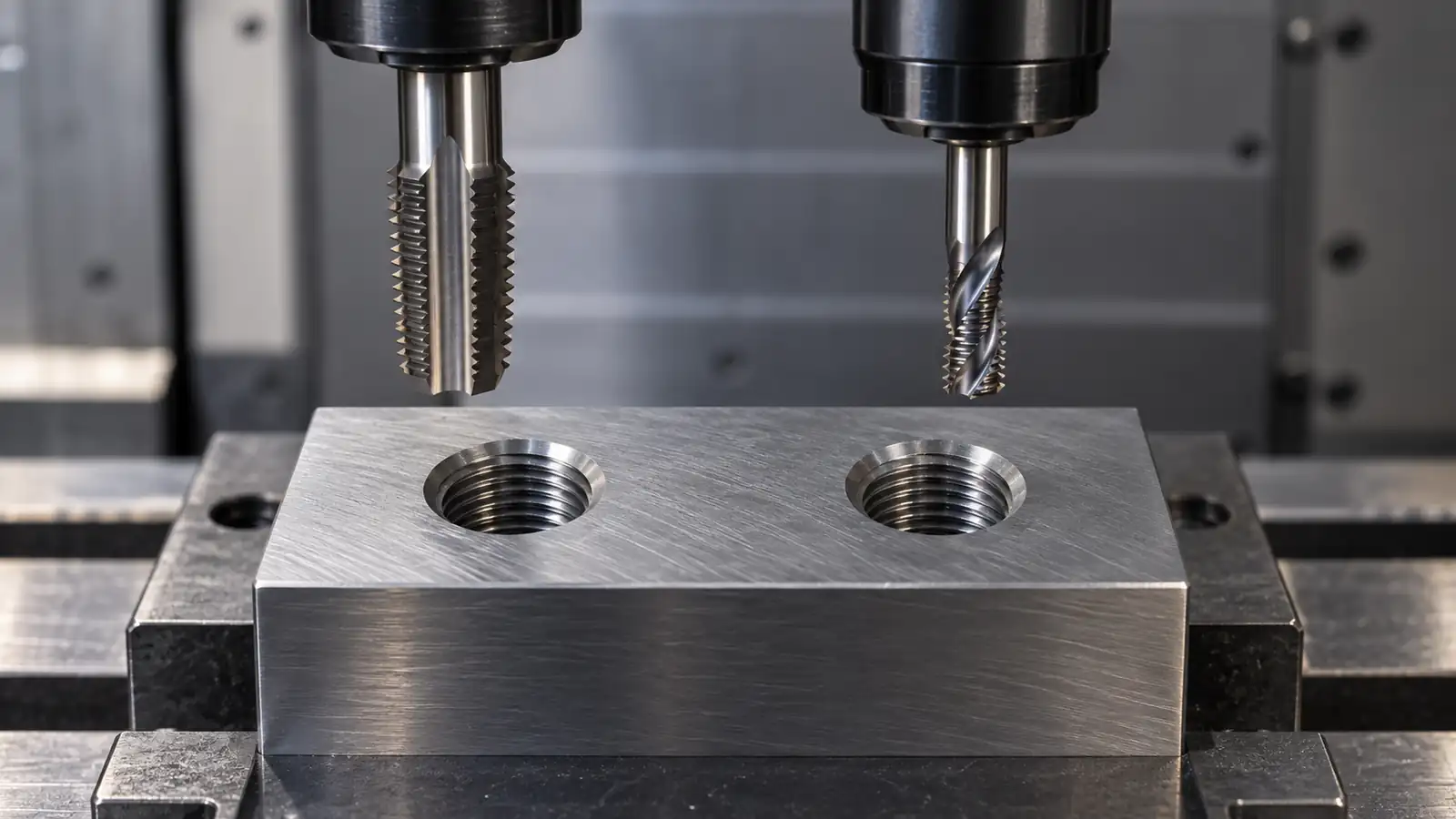
- Which features require special setup, process review or measurement?
- What finishing and post-finish dimensions are in scope?
- What inspection report, material record or first-article evidence will be delivered?
- Who can approve deviations, rework, source changes or a different process?
- What is included in the delivered cost and schedule, and what triggers a revised quote?
If answers are vague, request a technical clarification before purchase rather than assuming the quote covers the drawing. If you want JIZAO to assess a part, send the controlled model, drawing and RFQ requirements. This invitation is not a promise of capability, price or lead time for an unreviewed job.
Editorial scope and sources: procurement guidance based on drawing-led CNC practice; provider-model statements are bounded to the linked official Protolabs and Xometry service descriptions checked 26 September 2026. No provider was independently audited or ranked. Images are original illustrative concepts, not photographs of JIZAO or customer work.