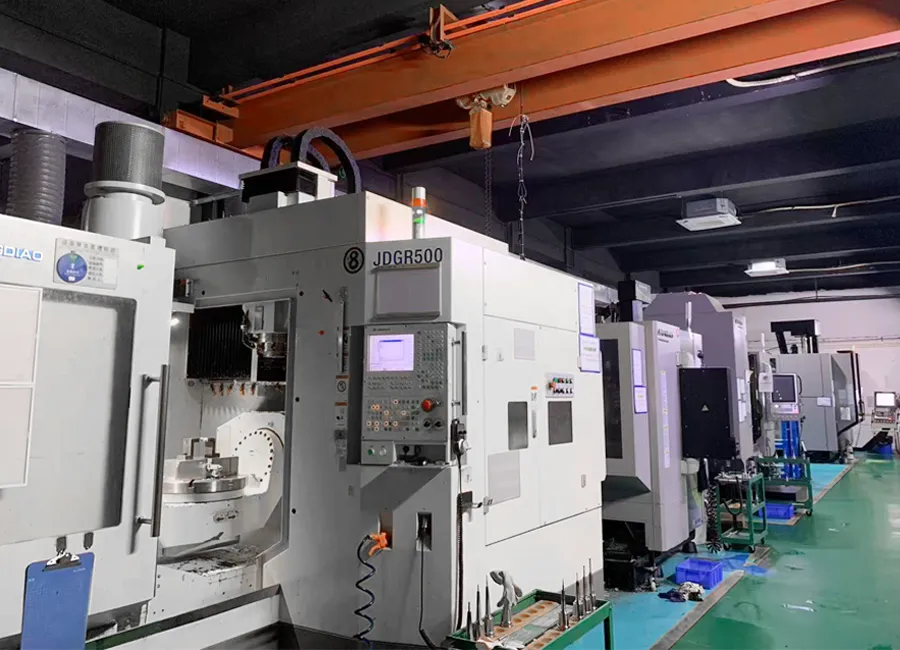
Dongguan earned the historical nickname “the world’s factory” through export-oriented manufacturing, investment linked to Hong Kong, a large migrant workforce and the growth of interconnected suppliers. It does not mean that the city makes everything the world uses. Today, the nickname is best understood as the starting point of a manufacturing story that also includes technology, automation and more demanding supply-chain coordination.
For an overseas CNC buyer, that distinction matters. A well-developed industrial environment can make supplier discovery easier; it does not certify the capability of any individual workshop. Research for this article closes on September 16, 2026. The latest full-year city statistics used here describe 2025, not a completed 2026.
Export processing created the initial opening
Dongguan’s investment-promotion center traces an important early milestone to the establishment of Taiping Handbag Factory in 1978 and the development of processing trade. It describes the combination of economic opening, proximity to Hong Kong and Macao, and investment from overseas Chinese as part of the city’s manufacturing takeoff. This is historical context—not evidence that today’s precision machining sector has the same business model. Dongguan investment-promotion center, historical account published in 2022.
Processing arrangements connected external orders and commercial channels with local production. Over time, manufacturing growth also attracted workers from other parts of China. A later account on the same official portal describes migrant workers as central to the city’s industrial and cultural development. Their contribution should not be reduced to a slogan about inexpensive labor. Official portal account of Dongguan’s migrant-worker history, 2025.
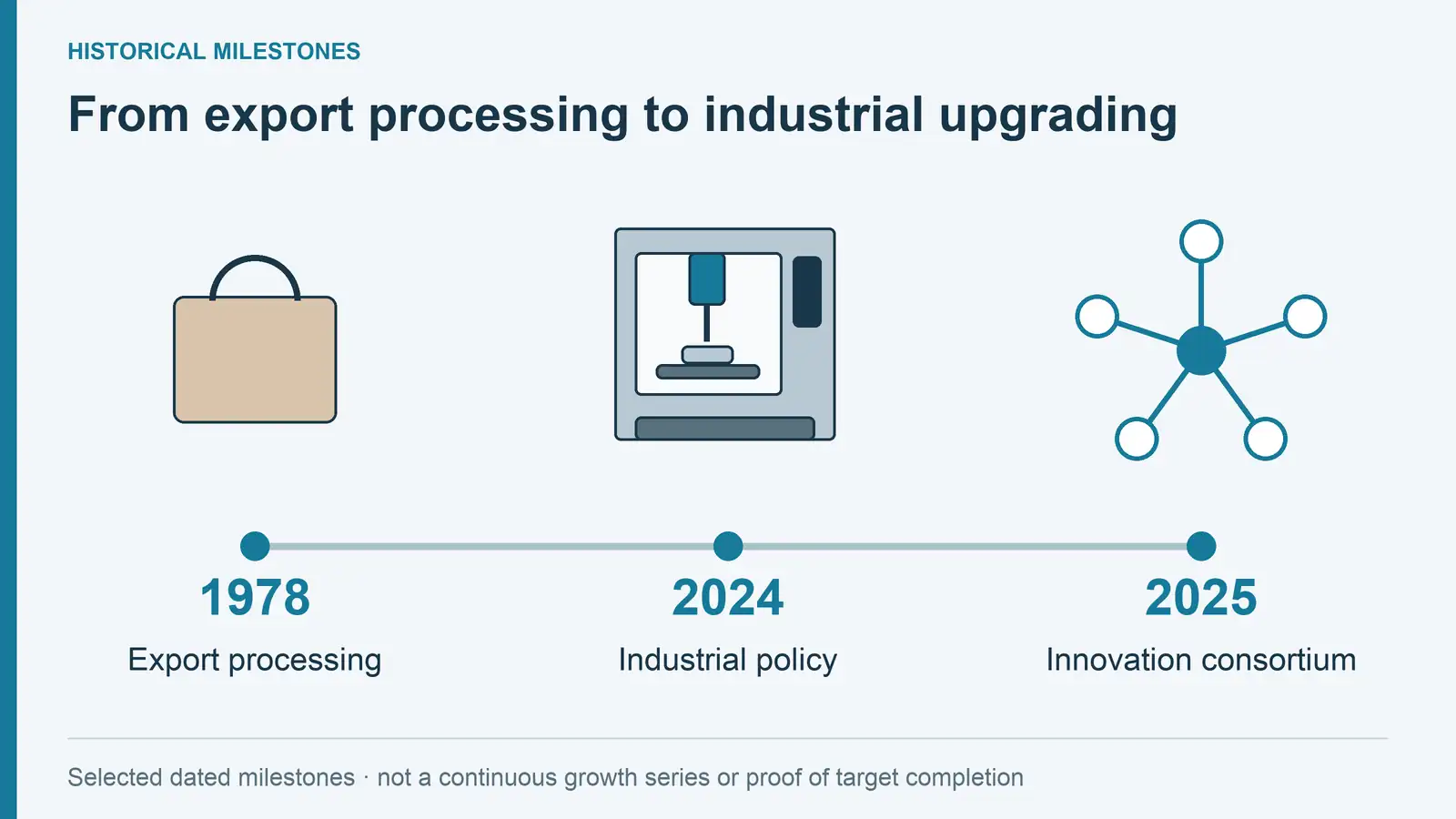
The historical lesson for procurement is about coordination: investment, people, orders and production knowledge developed together. Copying only one factor—such as a low unit price—does not recreate a functioning supply chain.
Why location and supplier connections matter
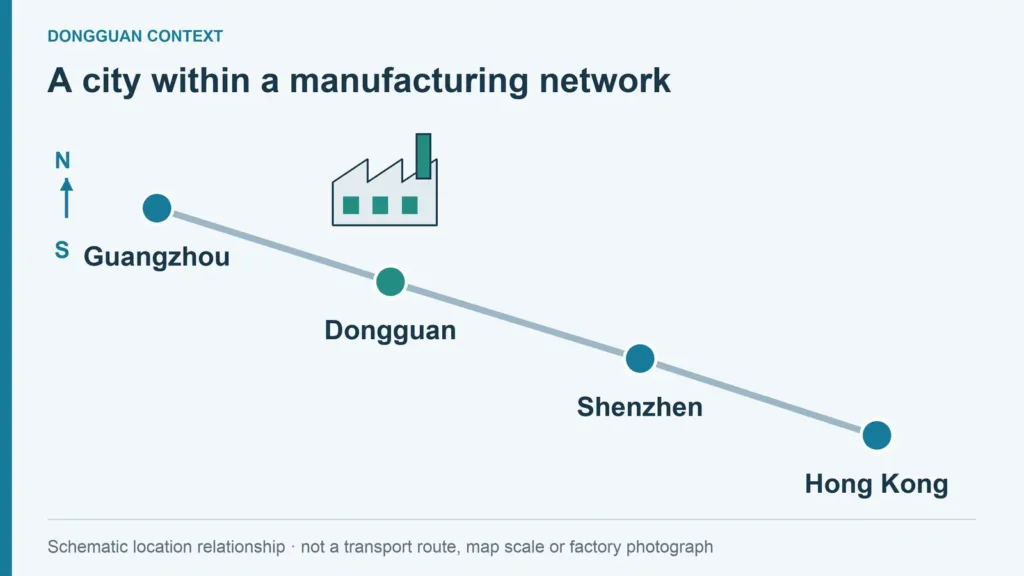
Dongguan sits within a broader Pearl River Delta manufacturing environment. The Songshan Lake administrative committee describes its location in relation to Guangzhou to the north and Shenzhen and Hong Kong to the south. That regional context helps explain why Dongguan should not be treated as an isolated factory city. Songshan Lake administrative committee.
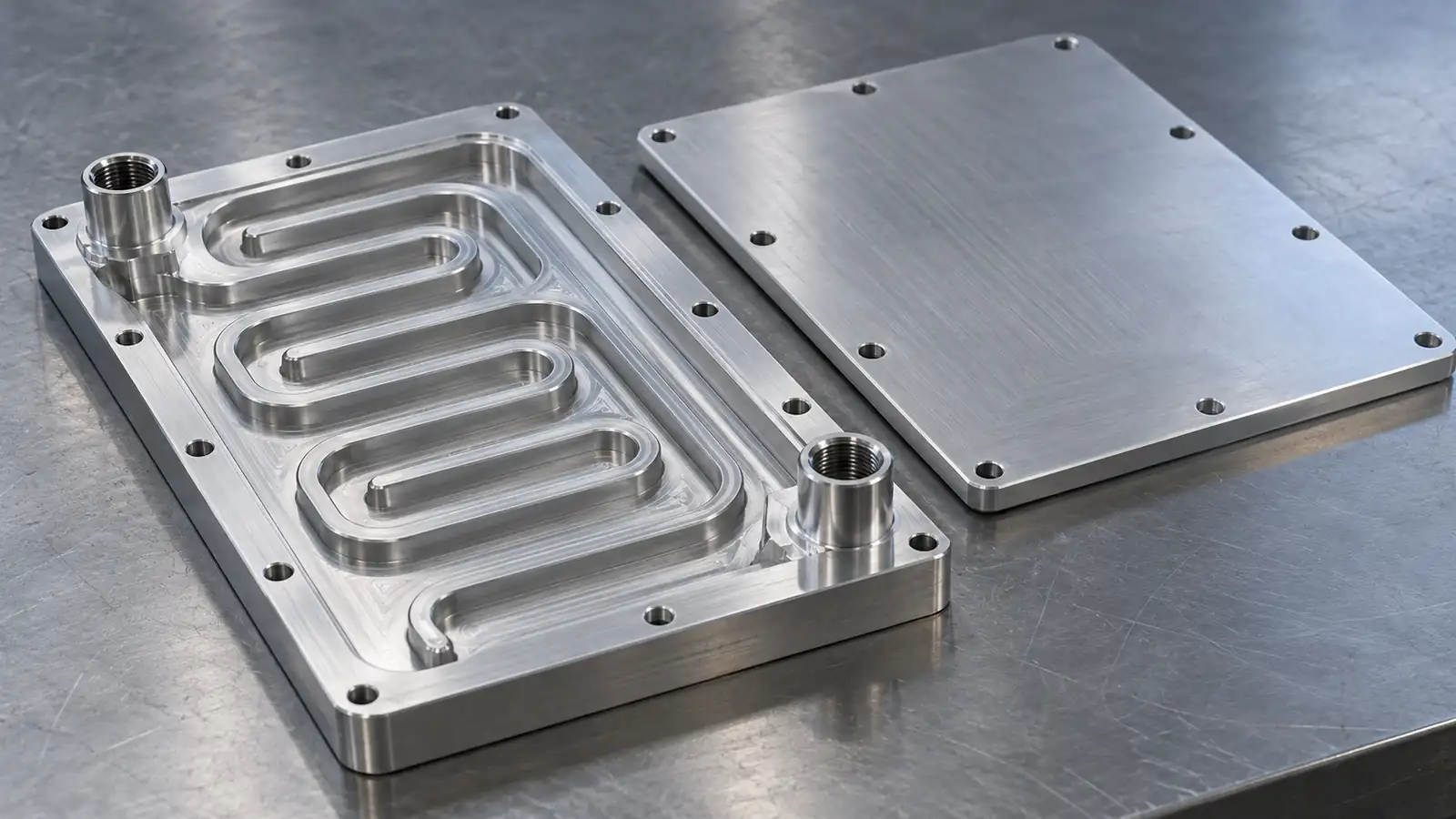
For a machined component, the relevant network may include material supply, cutting tools, machining, surface treatment, inspection and packaging. This is an illustrative procurement chain, not a claim that every stage is available from every Dongguan vendor. Proximity can make communication and physical handoffs more convenient, but traceability still depends on documented responsibility.
A useful question is therefore: “Which operations will this bidder perform, and which will another business perform?” A quoted lead time that excludes finishing or inspection is not directly comparable with a fully released shipment date. Likewise, a manufacturer’s registered office does not necessarily identify the workshop making the parts.
What the published 2025 figures actually show
Dongguan’s statistics bureau reported 2025 growth in value added of 4.0% for industry above designated size, 4.2% for manufacturing within that coverage, 6.2% for advanced manufacturing and 7.0% for high-technology manufacturing. These are growth rates, not shares of city output or global production. The last two classifications are not mutually exclusive pieces of a pie chart. 2025 statistical bulletin, published May 12, 2026.
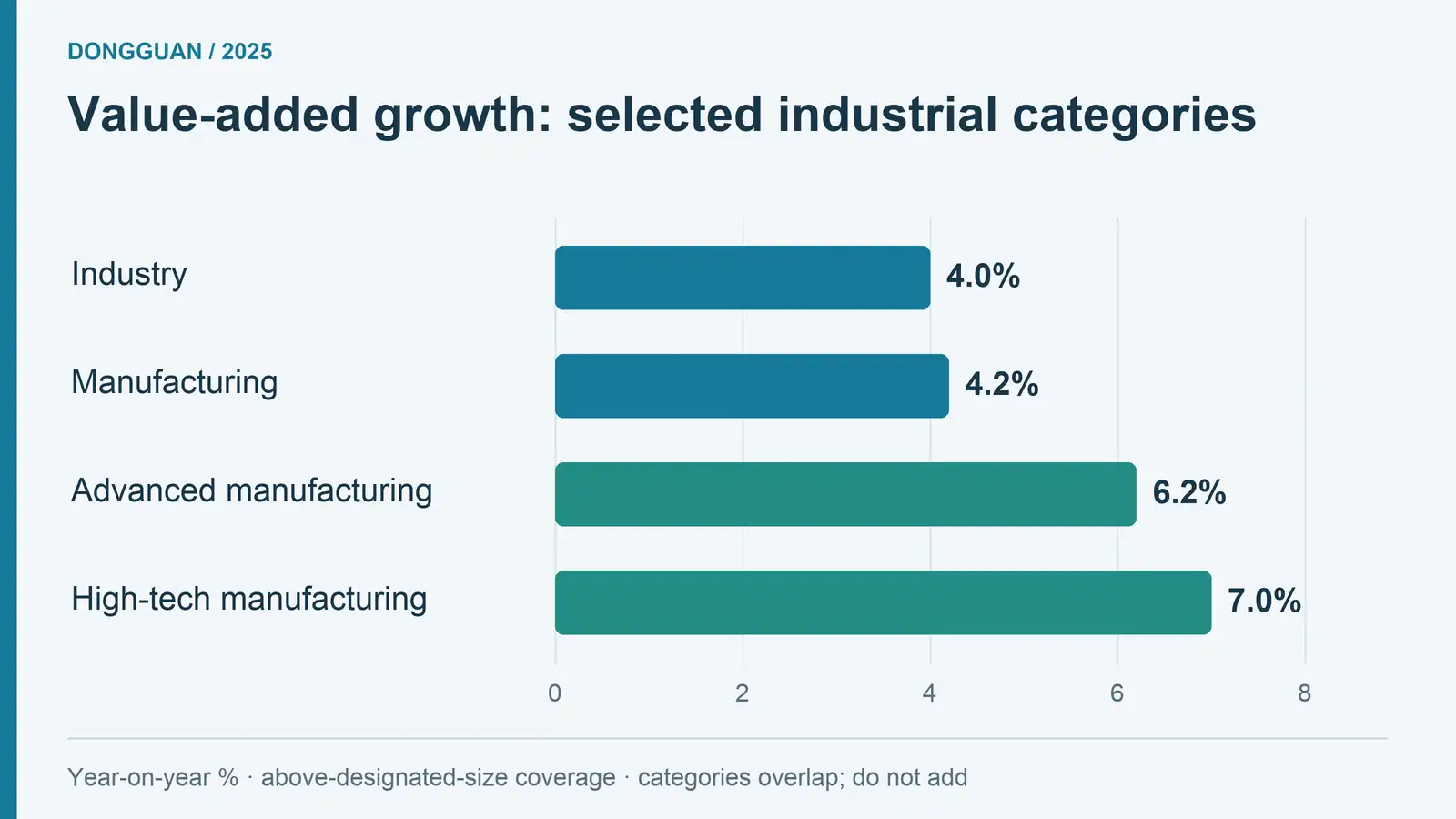
Those figures provide a more useful current reference than undated claims about how many of the world’s products come from Dongguan. They indicate that the named manufacturing categories grew during 2025 under the bulletin’s definitions. They do not establish the size of the CNC subcontracting market, the performance of every factory or the quality of a particular batch.
Upgrading is a process, not a completed label
Dongguan’s 2024 new-industrialization policy emphasizes technology innovation, advanced manufacturing, digital quality management and the development of industrial supply chains. Some statements in that policy are future targets. They must not be reported as achieved results merely because the target year has arrived. Dongguan municipal government policy.
A more specific development is the machine-tool and mold innovation consortium formed in March 2025. The city’s science and technology bureau describes collaboration among companies and research institutions around equipment, components and manufacturing needs. It is evidence of an organized innovation initiative, not proof that all local factories have adopted a particular technology. Dongguan science and technology bureau.
For buyers, the implication is to look for evidence of upgrading at the supplier level: controlled drawing revisions, a credible setup plan, inspection records that match critical characteristics, and a clear explanation of outsourced processes. “Smart factory” language on a website cannot replace those checks.
What this means for CNC and robotics-part purchasing
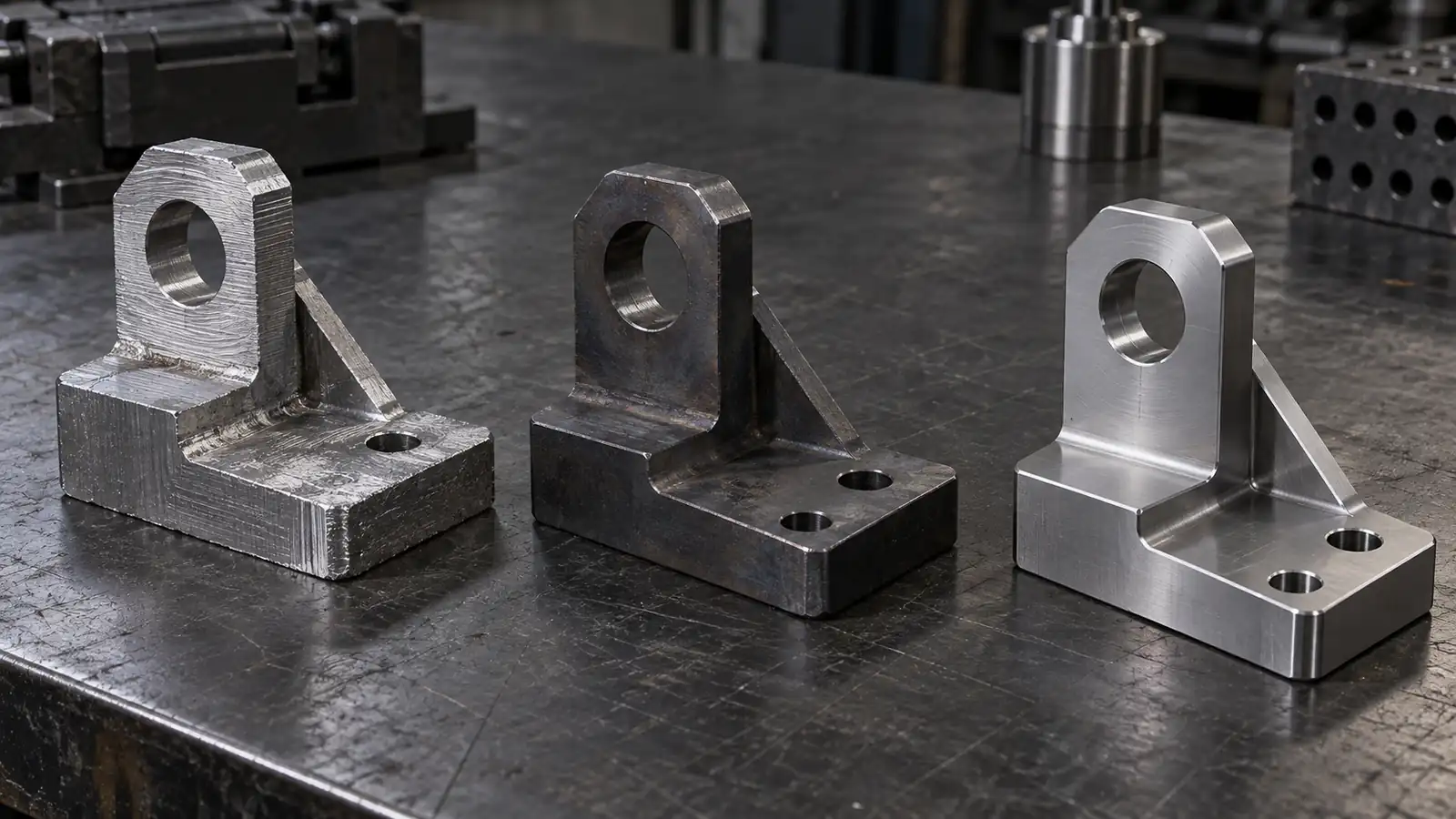
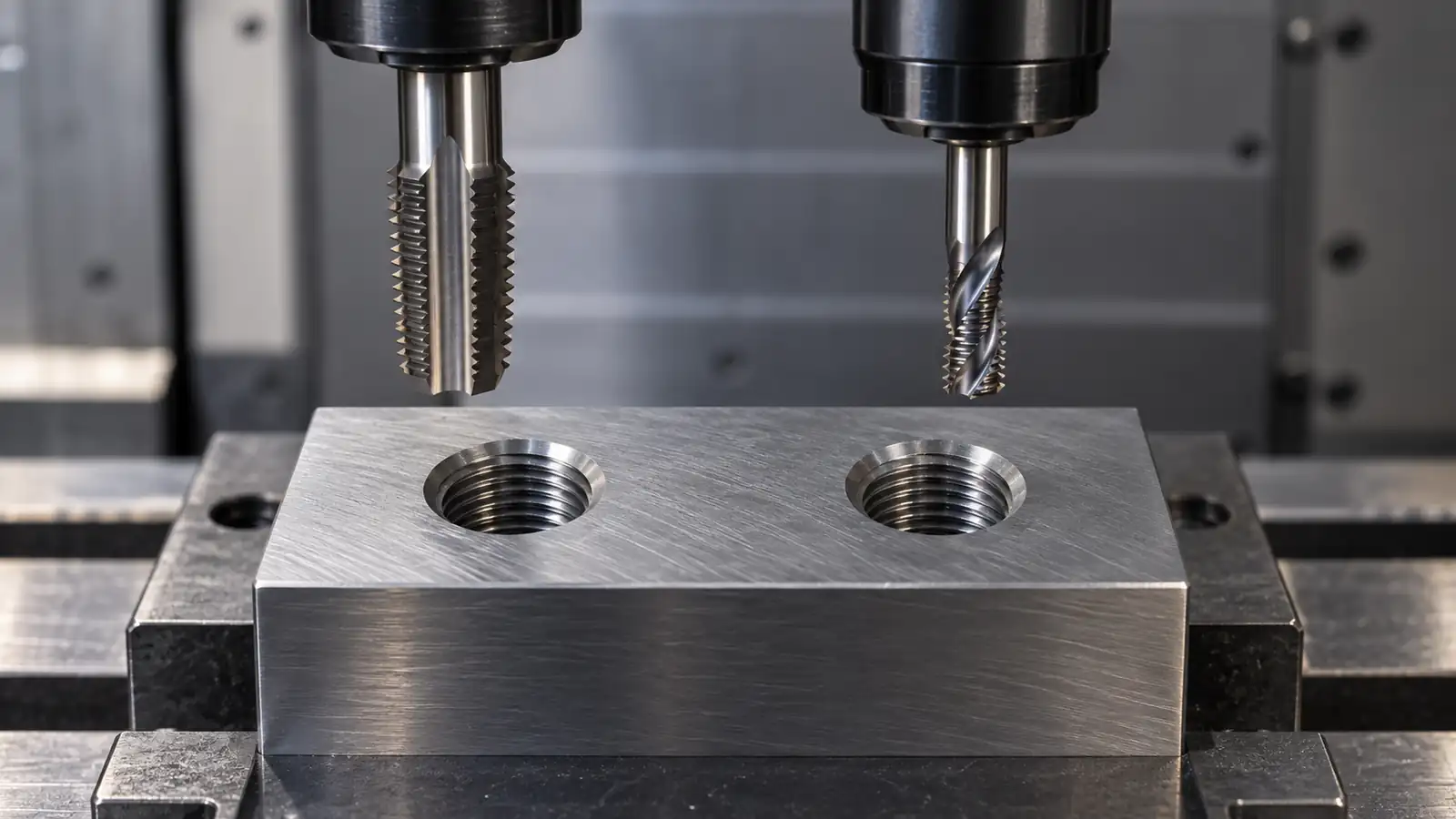
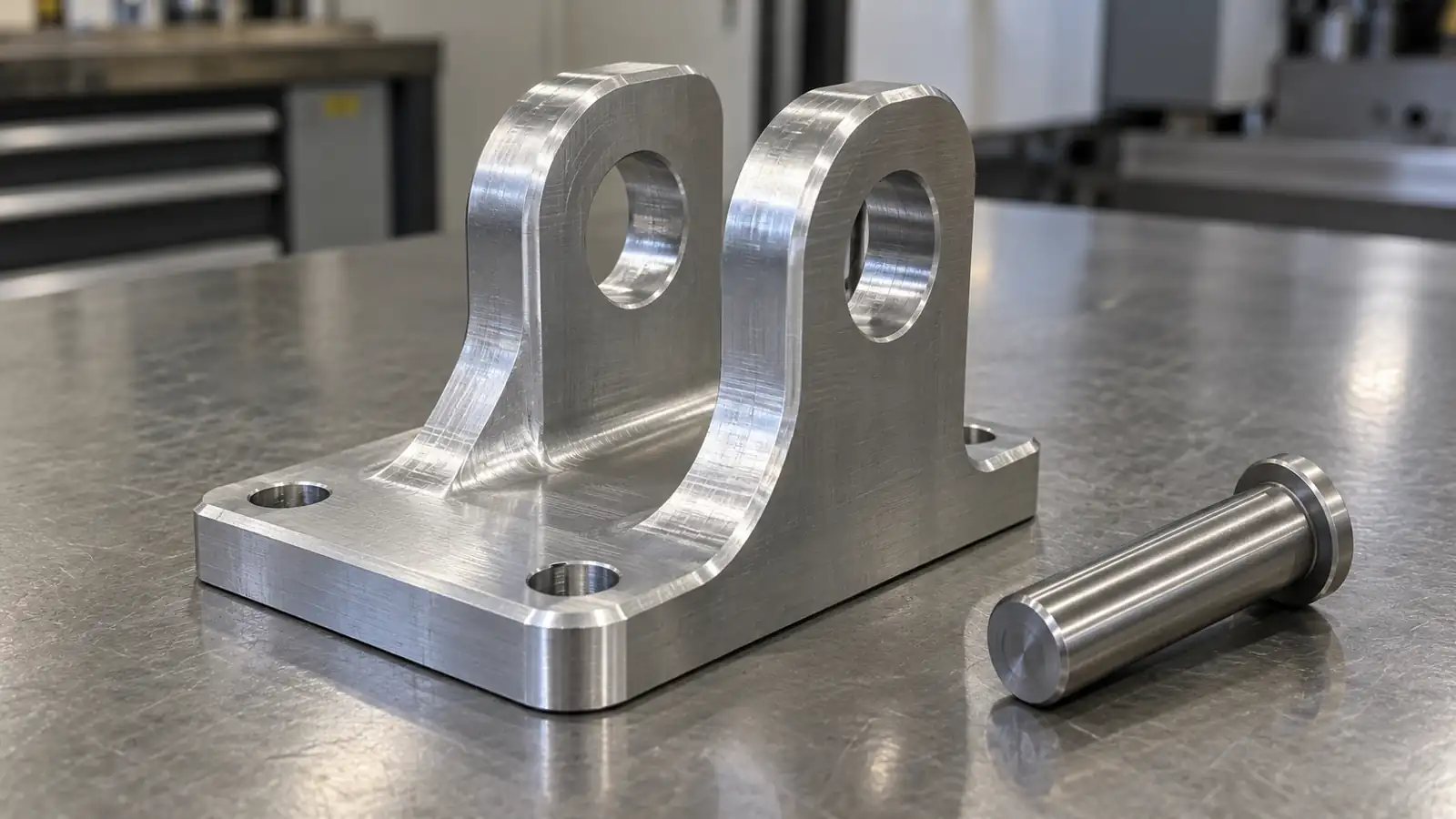
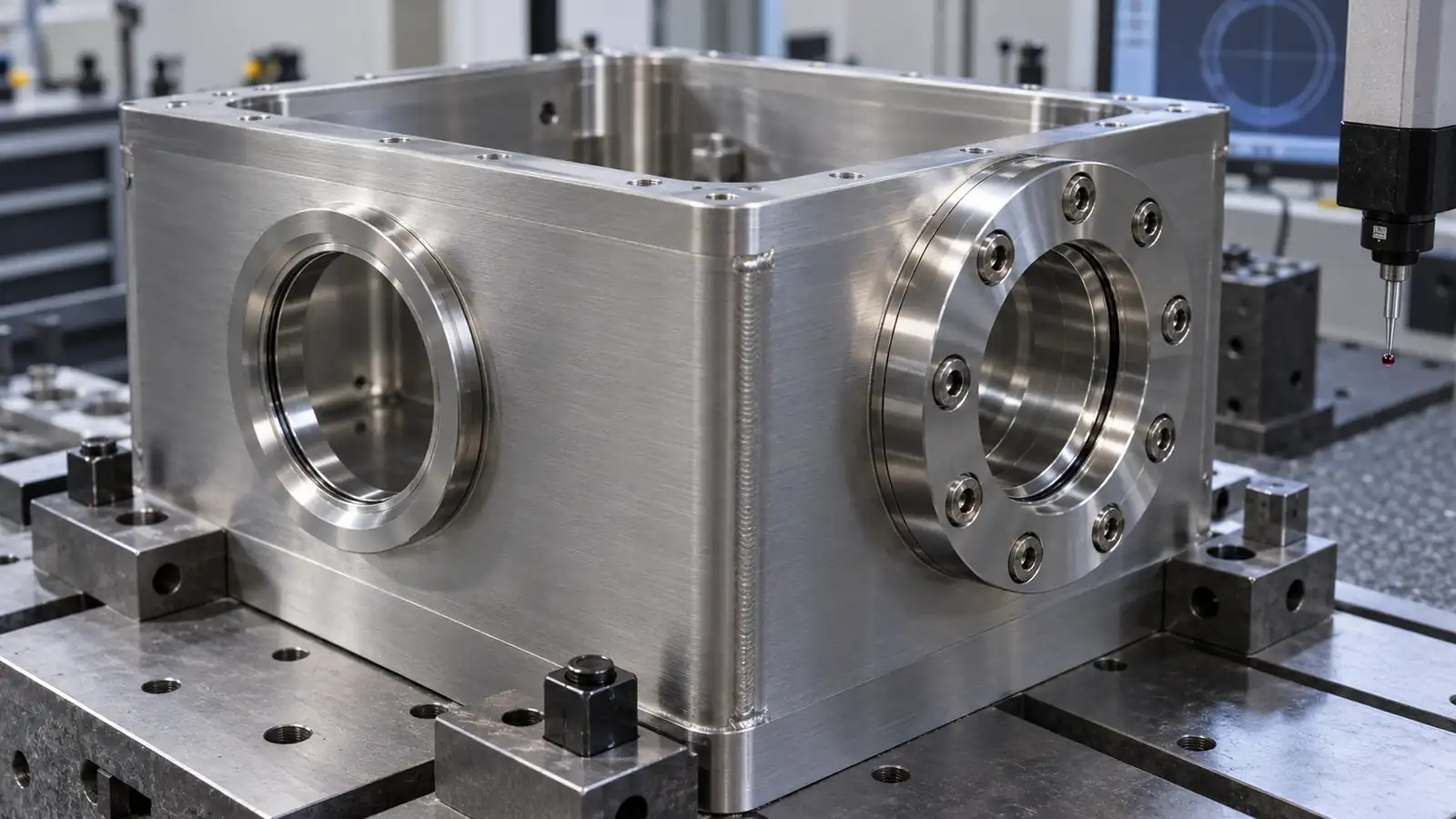
Imagine a robot-tooling project needing a machined adapter, a bracket and a finished enclosure. This is a hypothetical purchasing example, not a Dongguan customer case. Buying the items near one another may help coordination, but the interfaces between them still need explicit requirements. Hole patterns, mating surfaces, coating allowances and assembly access should be agreed before the supplier prices the work.
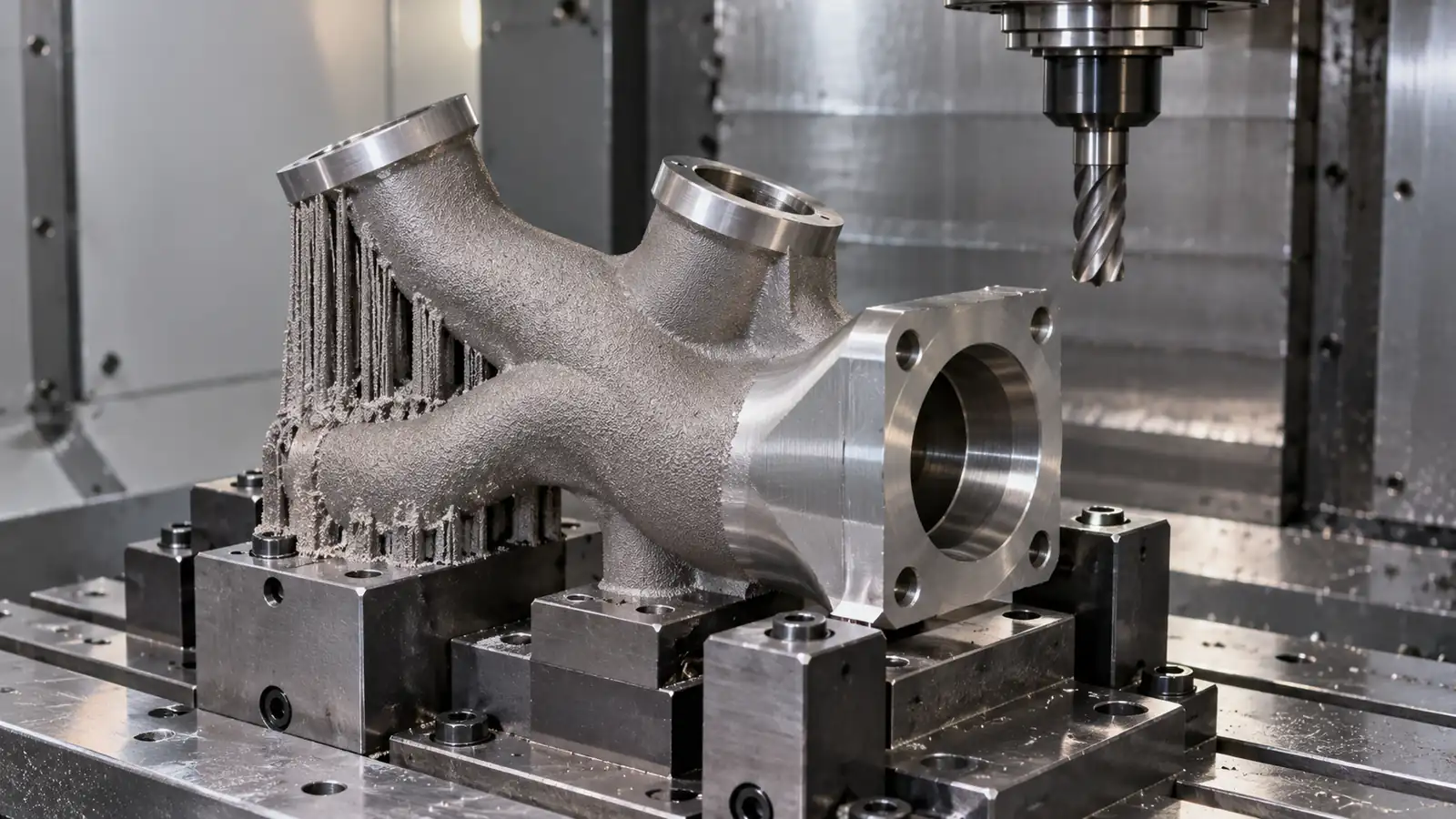
Five-axis capability can be relevant when the adapter or bracket has angled features or difficult tool access. It is not automatically necessary for every item in the assembly. Ask for the proposed manufacturing route and how the critical relationships will be verified, rather than choosing solely by machine count or the city’s reputation.
The purchasing trade-off is coordination versus visibility. A supplier coordinating the complete assembly can reduce the buyer’s separate handoffs, but makes documented responsibility especially important. Ask who controls the shared drawing revision, approves a change to a mating feature and checks the finished interface. Geographic proximity does not answer those questions, and a successful first assembly does not establish repeat-order process stability.
Evaluate a first order as a controlled qualification exercise. Confirm the revision, material documentation, inspection scope and handling of deviations. Keep the evidence from that order linked to future repeat orders, especially if production moves between workshops or subcontractors.
Read the nickname as history; buy on evidence
Dongguan’s reputation reflects a substantial industrial transformation, not ownership of all global manufacturing. Its history explains why it is worth investigating; current supplier evidence determines whether it is right for your project. An effective sourcing decision combines regional context with part-specific engineering and quality review.
For complex machined components, explore five-axis machining and inspection planning for multi-face parts. A drawing-led discussion is a better next step than treating any city nickname as a quality guarantee.