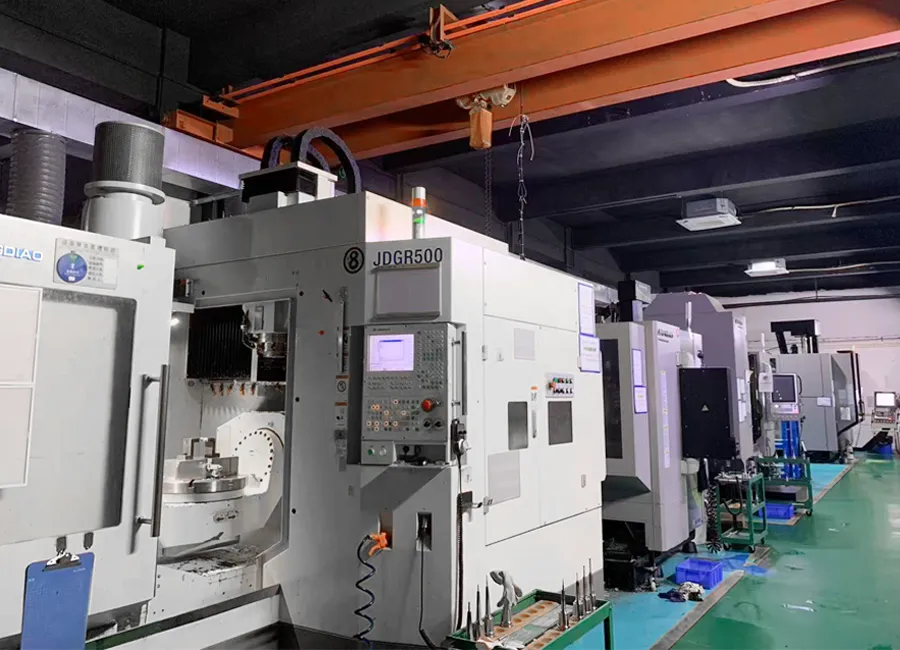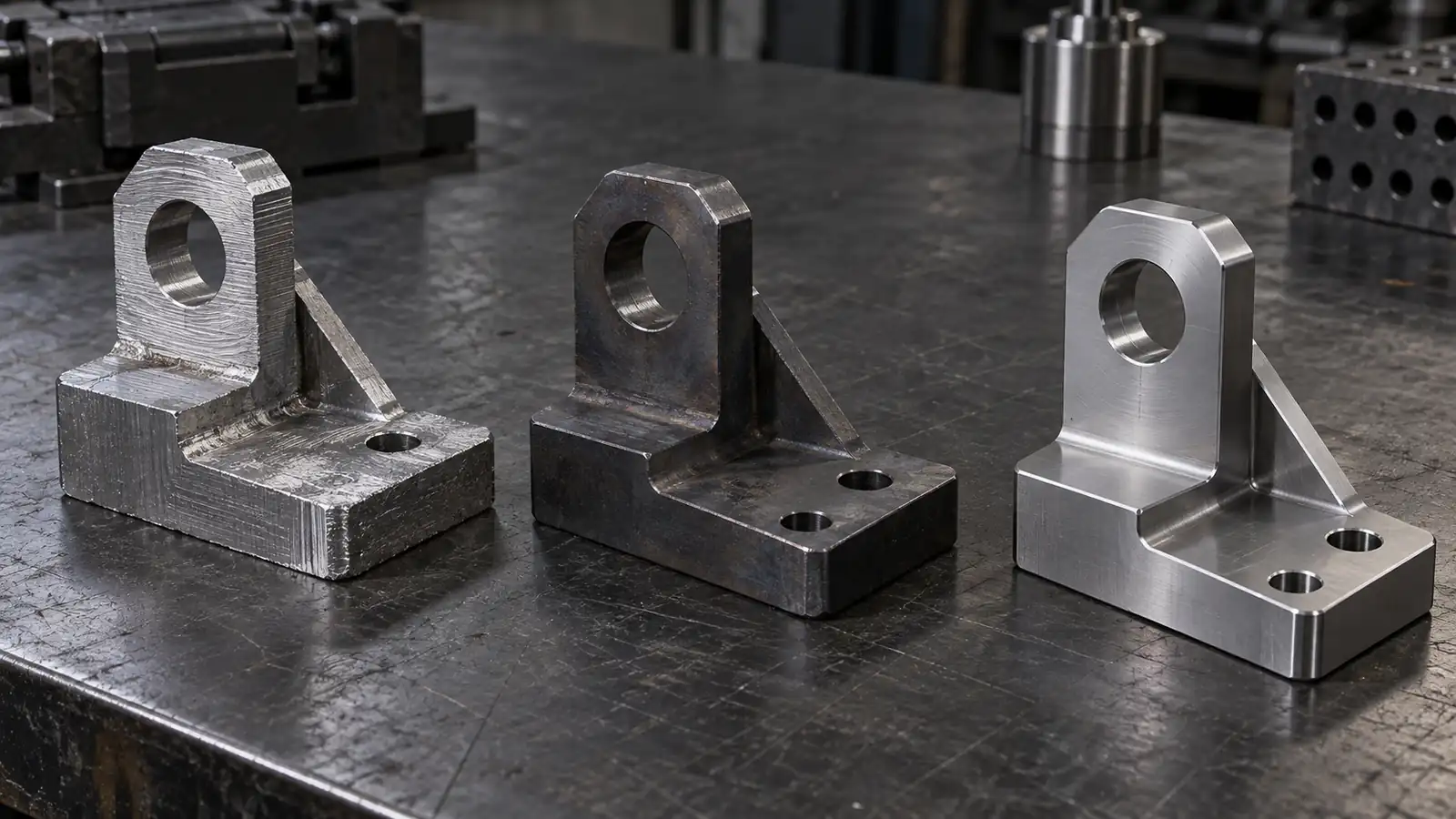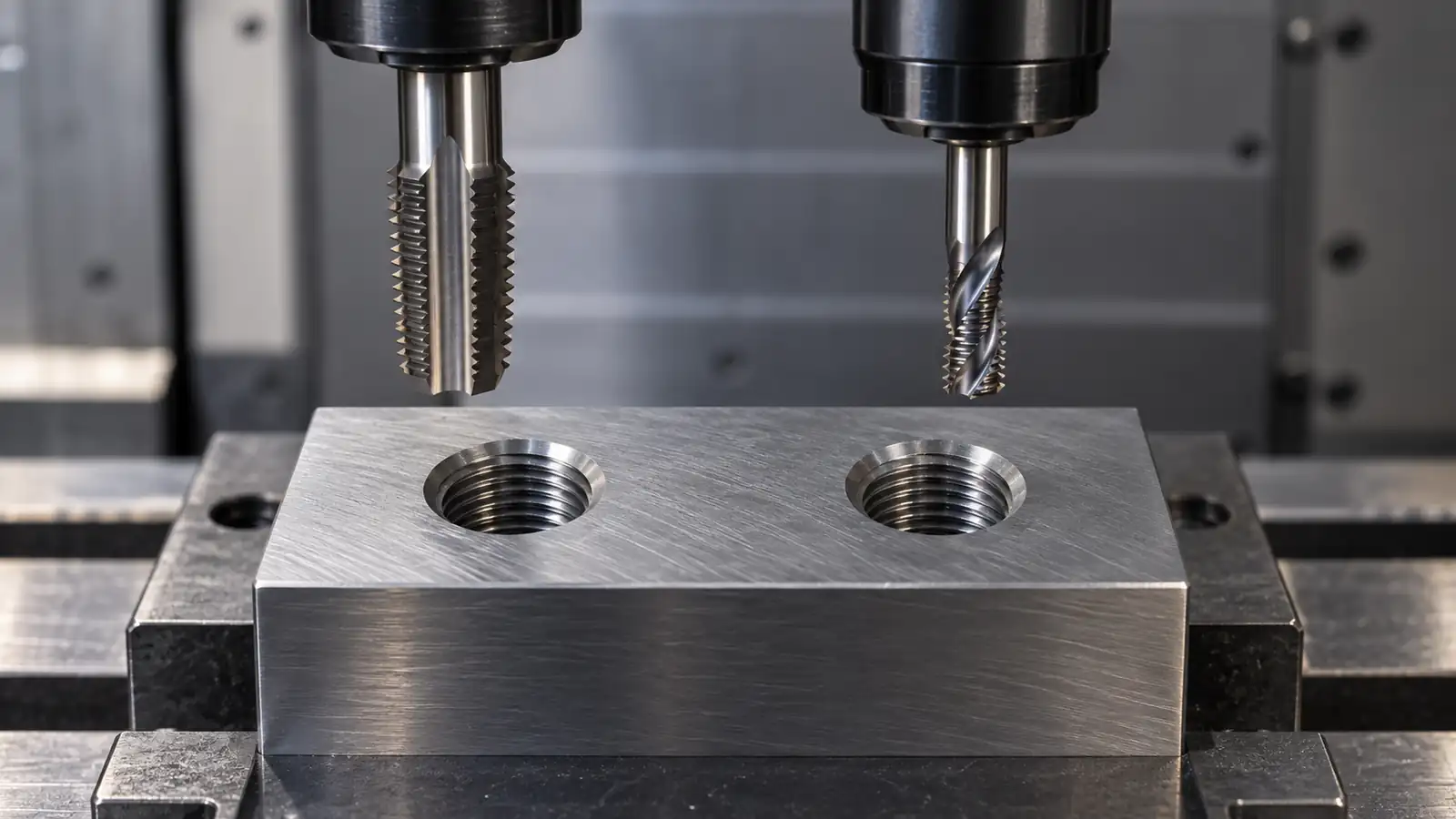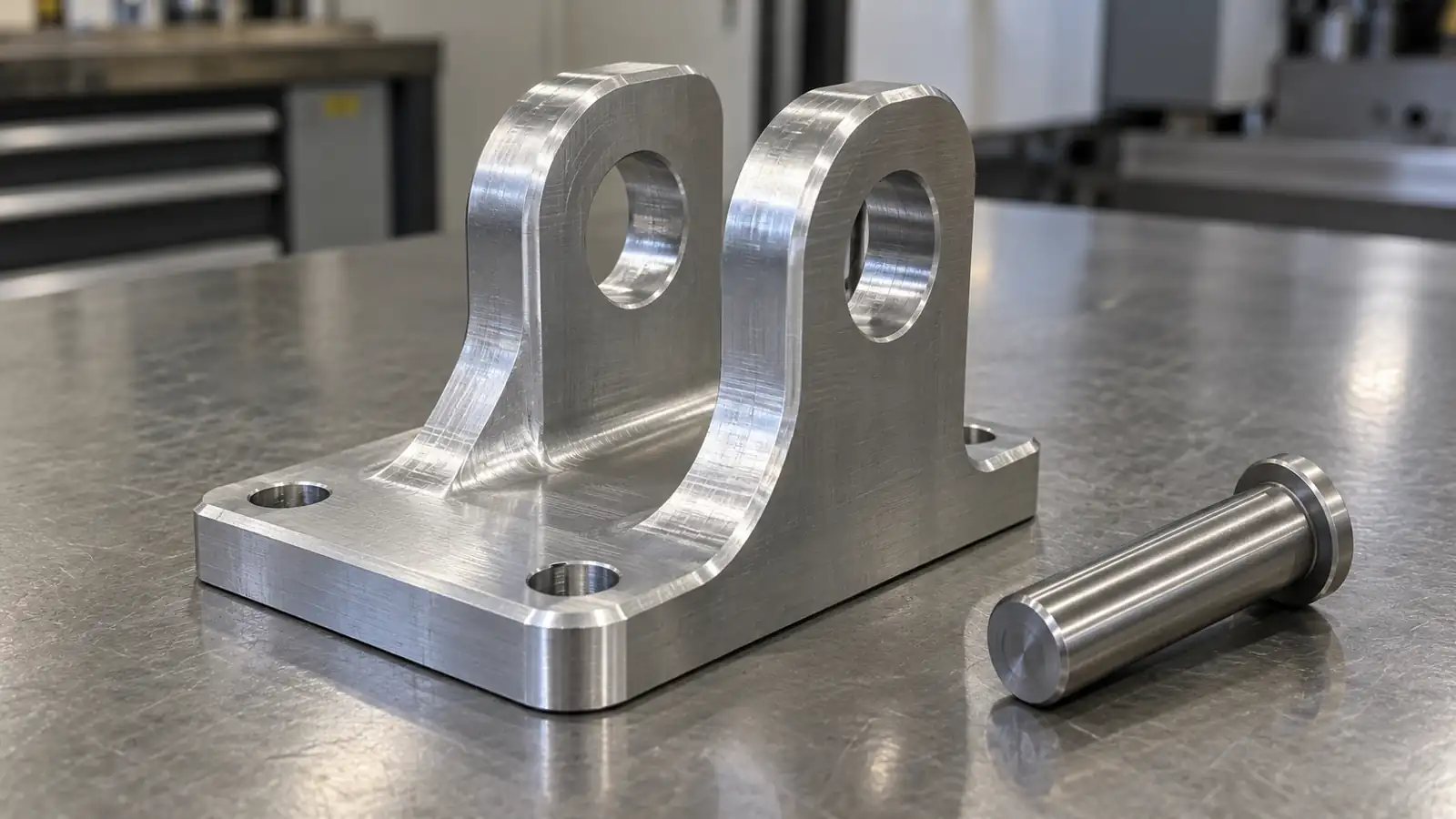
A five-axis machine on a supplier's equipment list does not prove that a particular part can be made, inspected, and repeated economically. Qualify the supplier against your part's geometry, material, critical relationships, finishing sequence, quantity, and evidence requirements. The useful question is not “Do you have five-axis?” but “What process and verification plan would you use for this revision, and which assumptions are still open?”
Start with the part's actual risk
Send a controlled, non-confidential RFQ package through an approved channel. It should identify the revision, material and condition, quantity by release, finish, delivery region, 3D model, and governing 2D drawing or model-based definition. If the supplier has not been cleared to receive proprietary drawings, start with a redacted geometry summary and critical-feature list instead. State which standard governs dimensional interpretation; do not combine ASME and ISO conventions without resolving conflicts.
Mark the interfaces that would make the part unusable: perhaps a bore-to-face orientation, a pattern located to a datum system, a sealing face, or a post-coating fit. Ask the supplier to separate those from cosmetic surfaces. This focuses the technical conversation on failure consequences rather than the overall complexity of the shape.
Ask for a proposed route, not an axis count
Five-axis motion can improve access and sometimes reduce re-clamping, but it does not eliminate fixtures, tool reach limits, distortion, or verification work. Request a high-level route that identifies starting stock, likely setup count, workholding references, roughing and finishing order, outsourced processes, and the point at which the final datum features become stable.
For each critical relationship, ask whether it can be cut in one controlled setup, transferred across setups, or established after finishing. A supplier should be willing to say when a feature requires a separate operation. If a thin wall, deep pocket, or long tool overhang dominates the risk, ask what will be tested on a representative prototype. A confident, unconditional tolerance promise without part-specific review is a weak qualification signal.
Verify measurement capability on the right features
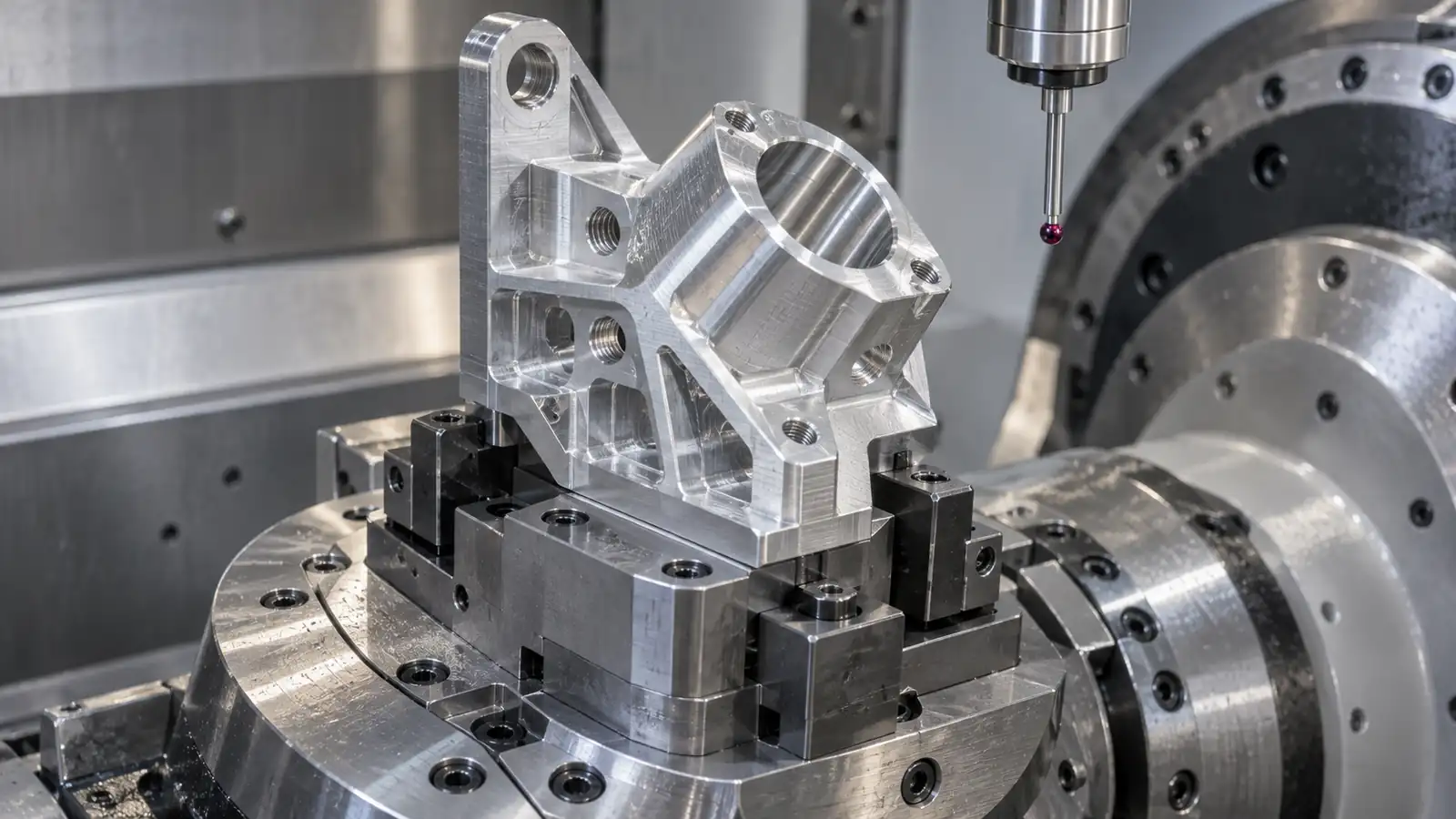
A CMM, probing system, or calibrated gauge is useful only when its access, datum simulation, measurement strategy, and uncertainty suit the characteristic. Ask which features will be measured in-process and which require independent final inspection. On-machine probing can support process control; it is not automatically an independent acceptance method. A CMM report without the datum alignment or characteristic identifiers may not answer your design question.
Ask for a sample report template with all customer information removed. It should show drawing or model revision, characteristic ID, nominal and limits, measured result, unit, method, and disposition. For a tight geometric tolerance, discuss how the physical datum features will be contacted or simulated. If a coating or heat treatment changes the functional dimension, specify whether acceptance is before or after that operation.
Check process ownership and change control
Complex parts often leave the machine shop for anodizing, plating, heat treatment, or special cleaning. Determine who selects and approves the processor, who masks or protects interfaces, and who owns final inspection after external work. A vague “finish included” line can hide mismatched assumptions about thread protection, dimensional growth, or appearance acceptance.
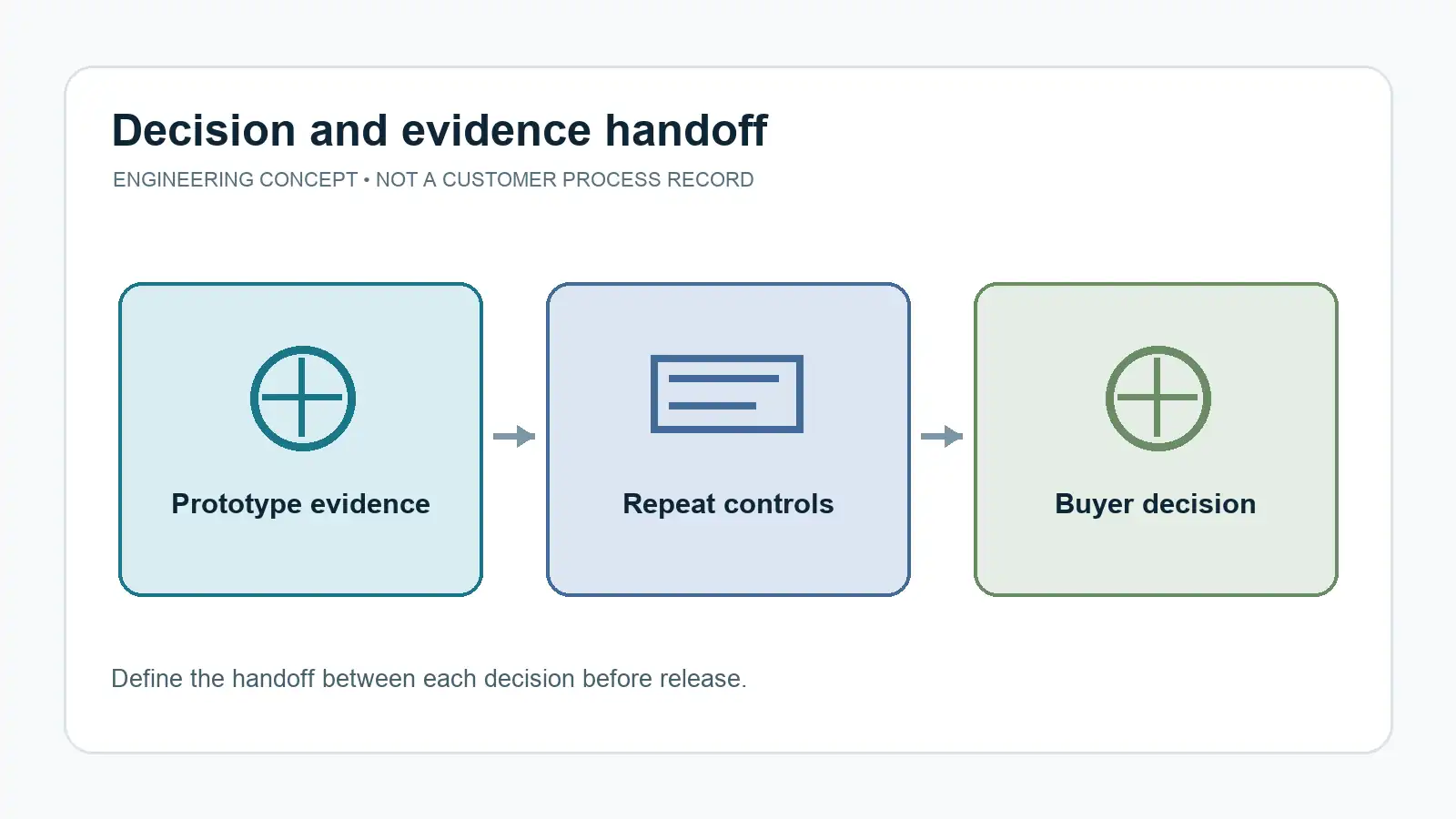
Ask how the supplier controls changes to machine route, fixture, subcontractor, material source, or inspection method after the first acceptable lot. This is especially important when a prototype moves into repeat orders. The buyer should identify which changes require notice and which require a new sample, inspection report, or formal approval. The exact control level should match the application and contract, not a generic checklist.
Request evidence proportional to the purchase
Evidence does not have to expose another customer's drawings. Useful examples include a redacted process-flow outline, anonymized inspection-report format, calibration policy, material traceability example, and a clear escalation path for a nonconformance. A quality-management certificate may support confidence in a system, but it does not prove capability for a specific geometry or tolerance. Verify the current scope and validity of any certificate rather than repeating a logo from a website.
For a prototype, focus on whether the supplier can identify unknowns, make the part, and return measured feedback. For repeat production, add process stability, revision control, lot identification, and capacity assumptions. For regulated aerospace work, ask whether a formal first article package applies and identify the exact customer or contractual requirement; do not casually label any first-off inspection “AS9102.” SAE AS9102C defines a specific documented FAI framework and does not replace customer or regulatory requirements.
Compare responses with a short decision matrix
Use the same five questions for each shortlisted shop:
- Which drawing requirements are ambiguous or at risk, and what assumption would you quote against?
- Which critical features can be made in a stable setup, and which need a transfer or special fixture?
- What will be measured, by which method, at what process stage, and with what report?
- Who owns outside finishing, final acceptance, and nonconformance disposition?
- What changes after prototype approval would trigger buyer notification?
Rate the specificity and consistency of the answers, not the polish of the sales deck. A supplier who asks a precise question about datum access or a finished thread may be safer than one who promises every tolerance immediately. If two quotations make different assumptions, resolve those assumptions before comparing price and lead time.
What to include in your RFQ conversation
Provide the revision-controlled requirement set, estimated annual and release quantities, material alternatives allowed or prohibited, critical-to-function features, finish and masking needs, inspection deliverables, packaging constraints, and decision date. Identify what is still negotiable. If the part is confidential, use only a channel your organization has approved for technical files; an ordinary contact form may be suitable for a non-confidential first discussion but not a controlled drawing transfer.
To start a non-confidential feasibility discussion, tell JIZAO the part family, material, quantity range, and the feature relationship you need to protect. Request a proposed review path before sharing controlled files. This article is general buyer guidance, not a claim that JIZAO has proven capability for your part.
Frequently asked questions
Does a five-axis machine guarantee one-setup machining?
No. Access, workholding, tool length, stock removal, part deformation, and final inspection may require multiple setups. Ask for the proposed route for your part.
Is ISO 9001 certification enough to qualify a supplier?
No. A quality-management certificate addresses a system scope; part-specific manufacturability and measurement still need review. ISO published a new ISO 9001 edition in September 2026, so verify the certificate's stated edition, scope, validity, and any transition expectations with the issuer or certification body.
Should I request a sample CMM report before placing an order?
A redacted sample format is reasonable when dimensional evidence matters. It helps you agree on characteristic mapping and datum alignment without asking for another customer's data.