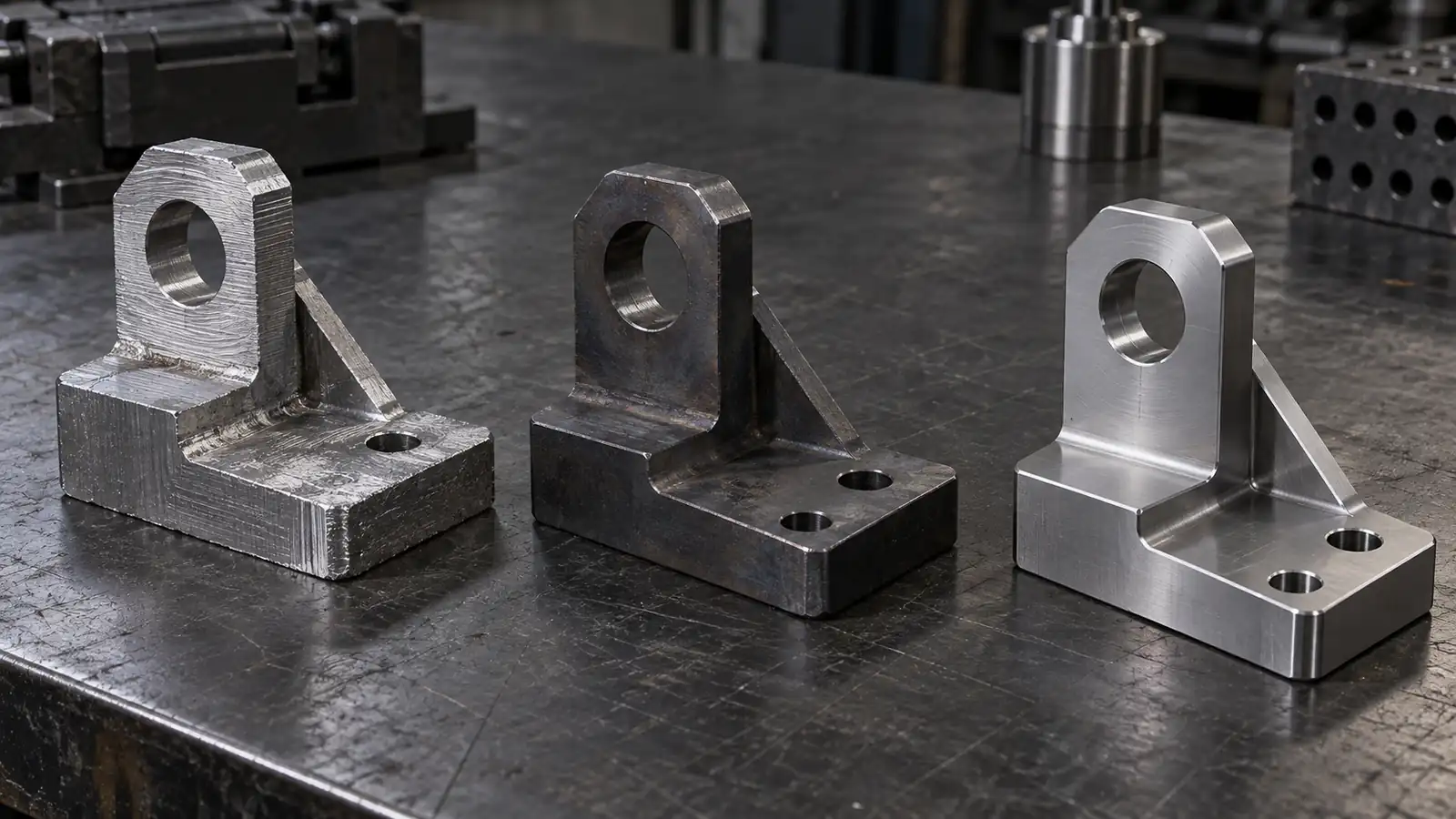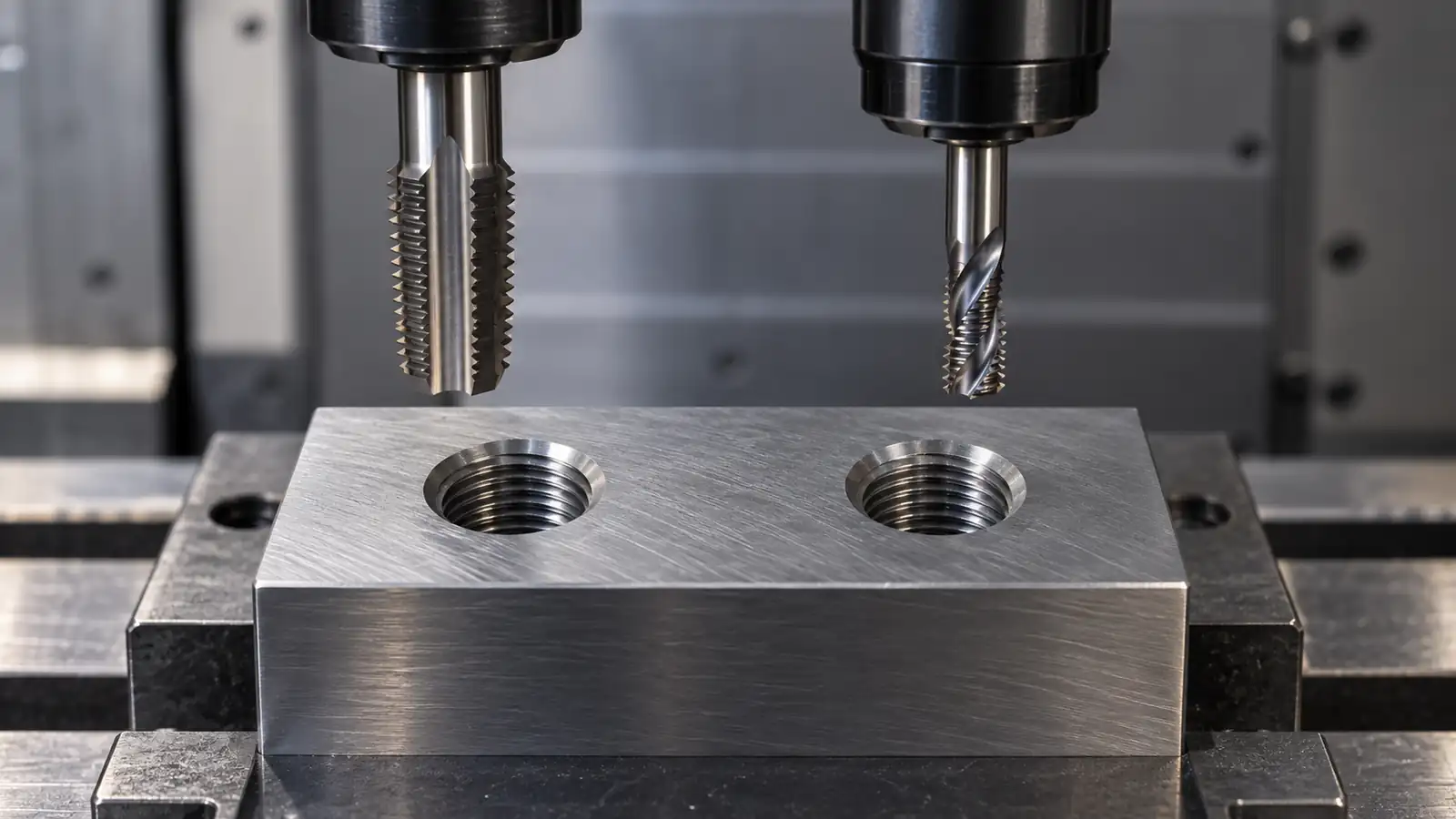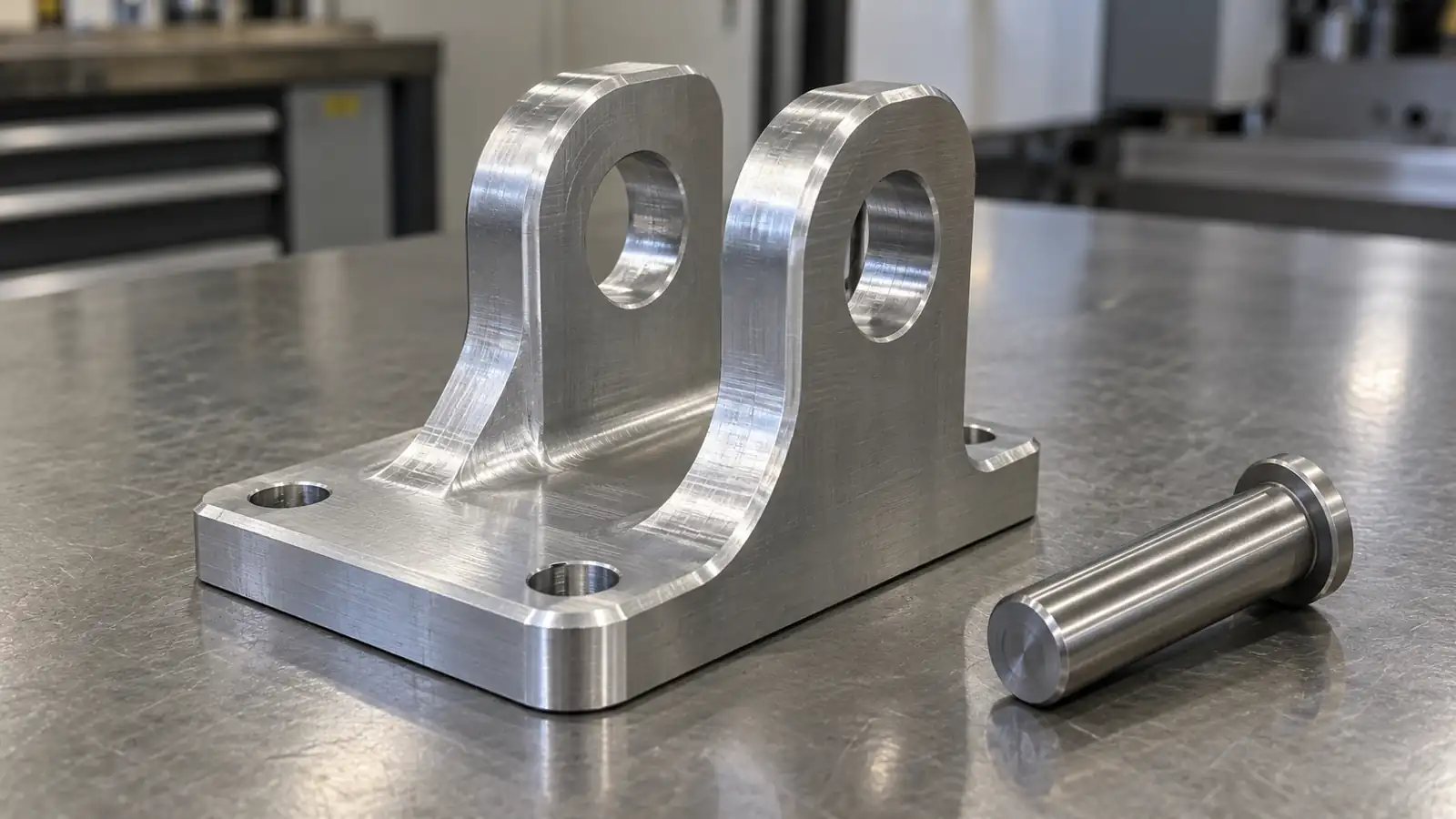
Choose a surface treatment by substrate and required function first: corrosion resistance, wear, appearance, electrical behavior or a mating fit. Anodizing is an aluminum oxidation process; electroplating deposits a metal and is often specified for steel or other compatible substrates; black oxide is a conversion finish on iron and steel with limited corrosion protection; PVD and DLC are engineered thin films for selected wear or friction conditions. None is a generic “better finish.” Define the significant surfaces, masking, final dimensions and inspection before the part is quoted.
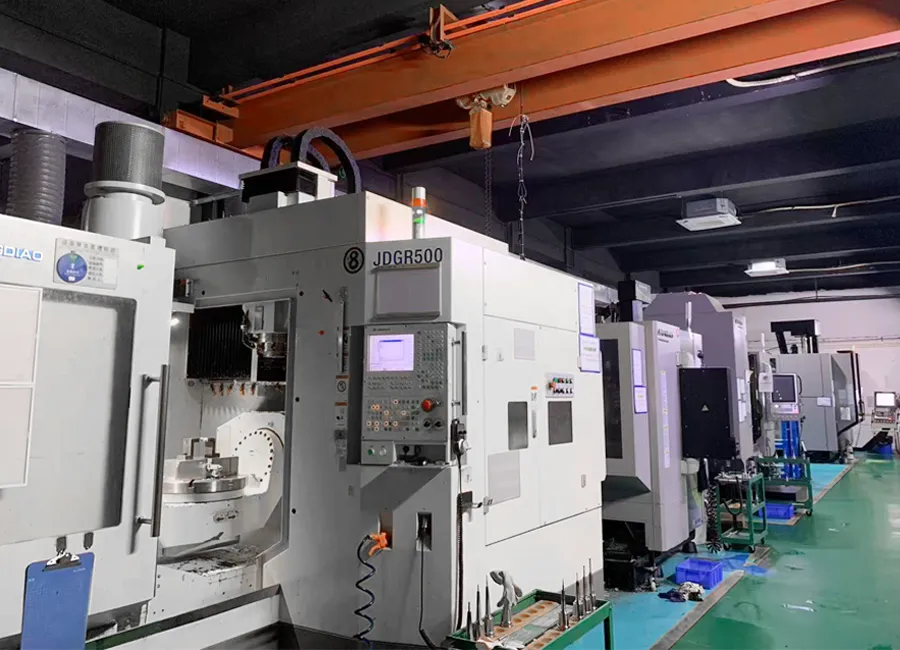
Here “post-processing” means work after the core machining operations. JIZAO's core CNC machining is in-house; anodizing and other approved surface treatments are managed partner processes, not an asserted in-house finishing line. The available route for a particular part requires supplier and engineering confirmation.
Match the treatment to material and failure mode
| Treatment family | Typical substrate and purpose | Dimensional or fit question | What to specify and verify |
|---|---|---|---|
| Decorative/protective anodizing | Aluminum alloys; appearance and corrosion-related protection | Which mating faces, bores, contacts or threads must be masked or assessed after treatment? | Alloy/temper, finish standard, color/appearance zone, coating requirement, seal, mask and final inspection |
| Hard anodizing | Aluminum alloys; wear-oriented oxide layer | How will oxide growth and pretreatment affect critical fits? | Engineering-purpose standard, significant surfaces, coating requirement, mask, post-finish tolerance and test |
| Zinc electroplating | Iron or steel; corrosion protection | Will deposited thickness close a thread or fit? Is hydrogen-embrittlement risk relevant? | Applicable specification, coating class/thickness, supplementary treatment, significant surfaces and risk controls |
| Electroless nickel | Suitable metallic substrates; engineered corrosion/wear or dimensional use | Are edges, bores and final fits included in the coating allowance? | Nickel-phosphorus specification, thickness, heat treatment if required, adhesion and final measurements |
| Black oxide | Iron/steel; dark, low-reflection or friction-related surface | Will any preservative oil affect a contact or cleanliness requirement? | Substrate, black-oxide specification, preservative state, appearance and function check |
| PVD or DLC thin film | Selected compatible components; wear/friction system | Can the substrate, preparation, temperature and mating surface support the film? | Exact film system, coated surfaces, thickness, adhesion/tribology requirement and supplier validation |
This table is a screening aid, not a substitute for selecting a standard, process variant and supplier-approved drawing note. “Suitable” depends on alloy, heat treatment, geometry, service environment and any regulatory restrictions.
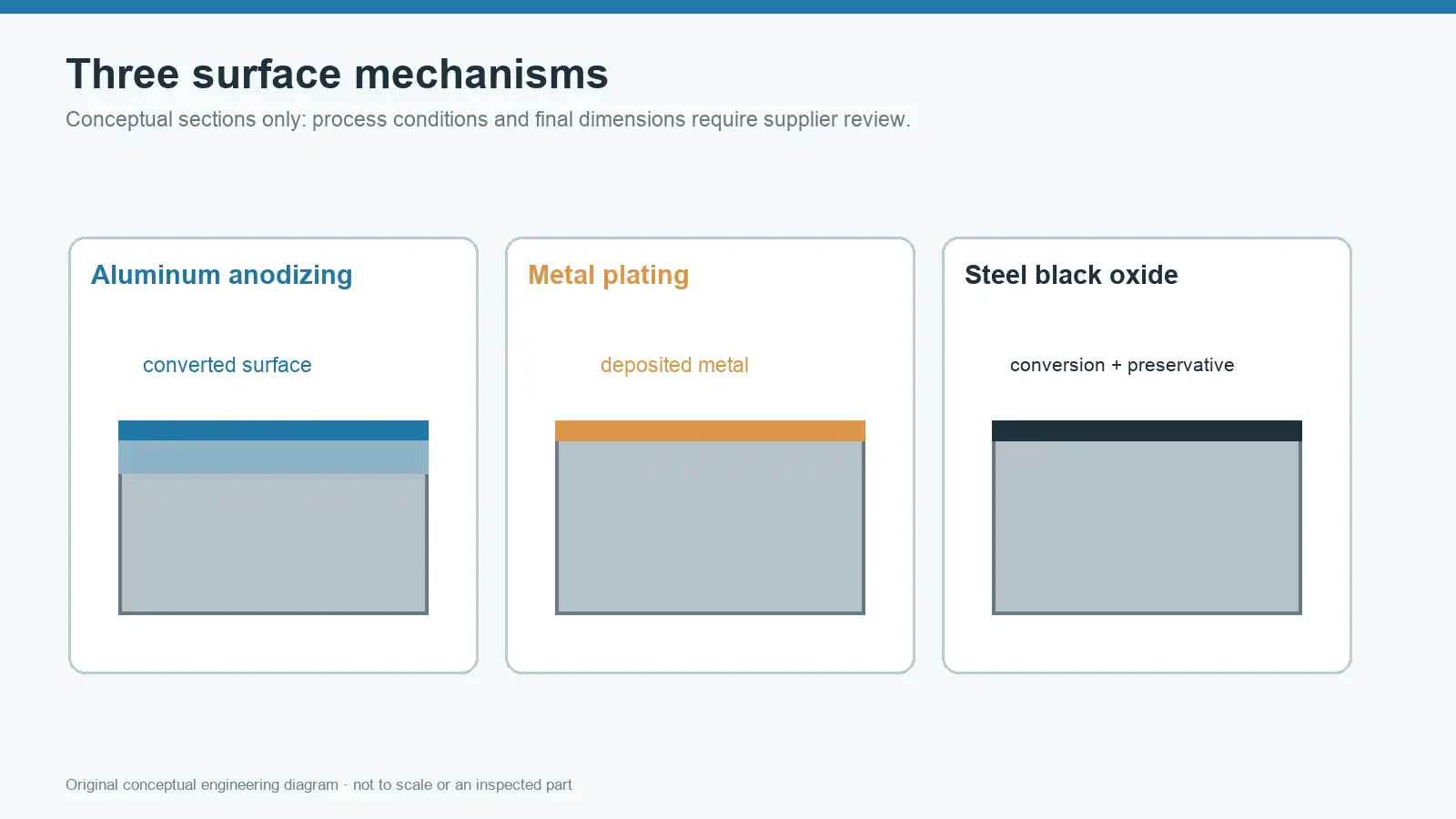
Anodizing: treat the final aluminum surface as a designed feature
Anodizing converts an aluminum surface to an oxide rather than simply laying a metal sheet on top. The oxide consumes some base metal and also changes the external surface position; the inward/outward proportions vary with process, alloy and pretreatment. The Aluminum Anodizers Council explicitly cautions that etching, plant parameters and masking change dimensional outcomes. Do not apply a single growth factor blindly to every hole or fit.
For decorative/protective anodizing, ISO 7599:2018 provides a current method for specifying those aluminum oxide coatings. It expressly excludes hard anodic coatings used mainly for engineering wear; ISO 10074:2021 is the current published hard-anodizing specification under ISO review as of this draft. Choose the actual contract standard and variant, not a generic “anodize black” note. A color label alone says little about coating thickness, seal, appearance acceptance or the behavior of a precision bore.
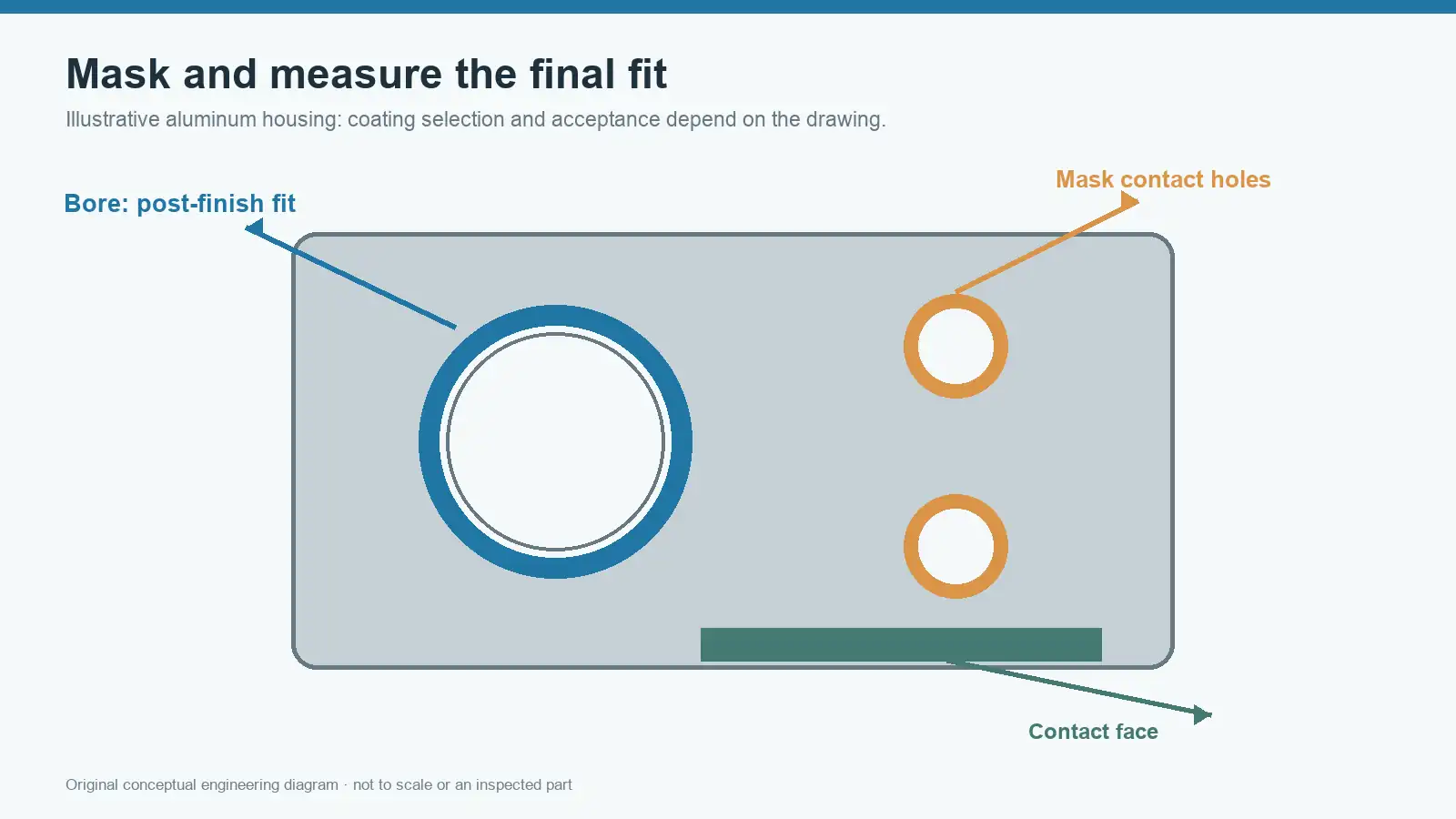
The drawing should mark masked electrical contacts, grounding areas, threaded holes, close-fit bores, sealing lands and any rack-contact restrictions. State which dimensions are inspected after anodizing. If a bore cannot tolerate the finish, masking or a revised pre-finish size may be discussed with the anodizer and machining engineer. A detailed Type III drawing review should settle the coating, masking and post-finish acceptance method; this overview focuses on choosing among finish families.
Electroplating: distinguish deposited metal from conversion finishes
Electroplating deposits a metal layer; zinc on iron or steel is commonly specified for corrosion protection. ASTM B633-23 is active and covers electrodeposited zinc on iron and steel, including classes, supplementary finishes and tests. It specifically warns about high-strength steel and hydrogen embrittlement; ASTM B1031-26 explains why pre- and post-coating heat-treatment decisions must be risk-based and why baking is not a universal cure. Do not choose a plated finish for a high-strength component without the material and process specialist's review.
Plated thickness uses part of a clearance or thread allowance, and distribution may vary with geometry and process. Specify the coating on significant surfaces, the finish state, any masked contact, whether the thread is checked after plating and what corrosion or adhesion evidence is required. A bare “zinc plate” note is not enough to resolve these choices. Nickel or chromium electroplating has different purposes and specifications; it must not be assumed equivalent to zinc.
Electroless nickel is a separate autocatalytic deposition process—not electroplating. ISO 4527:2003 remains published and specifies nickel-phosphorus coating requirements and tests. If the design needs this route, identify it by its own standard, deposit requirement and final fit, rather than writing “nickel plating” ambiguously.
Black oxide: a dark conversion layer is not a corrosion coating for every environment
ISO 11408:1999, confirmed current in 2026, covers black oxide on iron and steel. Its abstract lists decorative, low-reflection and some sliding/bearing uses, and states that corrosion protection is very limited even with preservative treatment. Black oxide can be appropriate for a low-reflection steel fixture or a protected interior component, but it should not be selected solely because the part must survive aggressive outdoor exposure.
The conversion layer is not equivalent to building up a plated metal deposit. Still, do not assume “zero dimensional effect” for an unreviewed fit: cleaning, conversion, preservative and subsequent handling can affect the final condition. State whether oil or another preservative is allowed, whether cleanliness or electrical contact matters, and whether the assembly fit is checked in the final state.
Is “PCD coating” the right term?
Usually not for a CNC part-finish drawing. PCD commonly means polycrystalline diamond as a cutting-tool material, for example a diamond tip bonded to a carbide tool body. Kennametal's PCD insert description and ISO 22180:2019 distinguish PCD tool material from CVD diamond-coated tools. A request for “PCD coating” could therefore confuse the tool that cuts the part with a film to be applied to the delivered component.
If the intended function is reduced friction or wear on a finished part, ask whether a qualified PVD, PACVD or DLC (diamond-like carbon) coating system is appropriate. Oerlikon Balzers describes DLC as a family of engineered films for tribological components, not one universal material; Ionbond describes PVD and PACVD deposition routes. Coating selection still requires substrate, pre-treatment, service environment, adhesion, temperature and mating-surface review. Do not replace “PCD” with “DLC” by guesswork if the designer actually means a diamond tool or another process.
Put coating and inspection in the same RFQ package
Before release, send a controlled model and drawing with the base material/condition, chosen standard and revision, coating family, significant surfaces, masking or contact locations, finish-state dimensions, appearance zone and acceptance tests. Ask who owns the handoff between machining, the managed finishing partner and final inspection. A pre-finish size check does not prove a post-finish fit; conversely, a final dimension cannot reveal whether a required film property or adhesion criterion is satisfied.
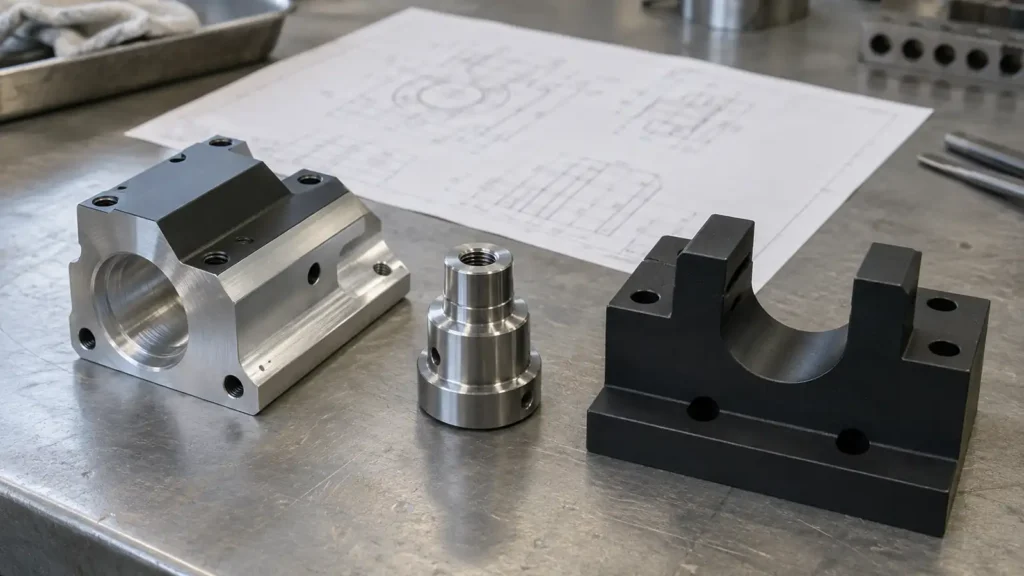
For a hypothetical aluminum housing with a close-fit bore and electrical contact, ask the anodizer whether those areas should be masked and define final bore acceptance. For a plated steel threaded stud, verify thread class and plated-state inspection; for a black-oxide fixture, specify whether preservative oil is acceptable. These examples show decision logic, not JIZAO jobs or guaranteed outcomes.
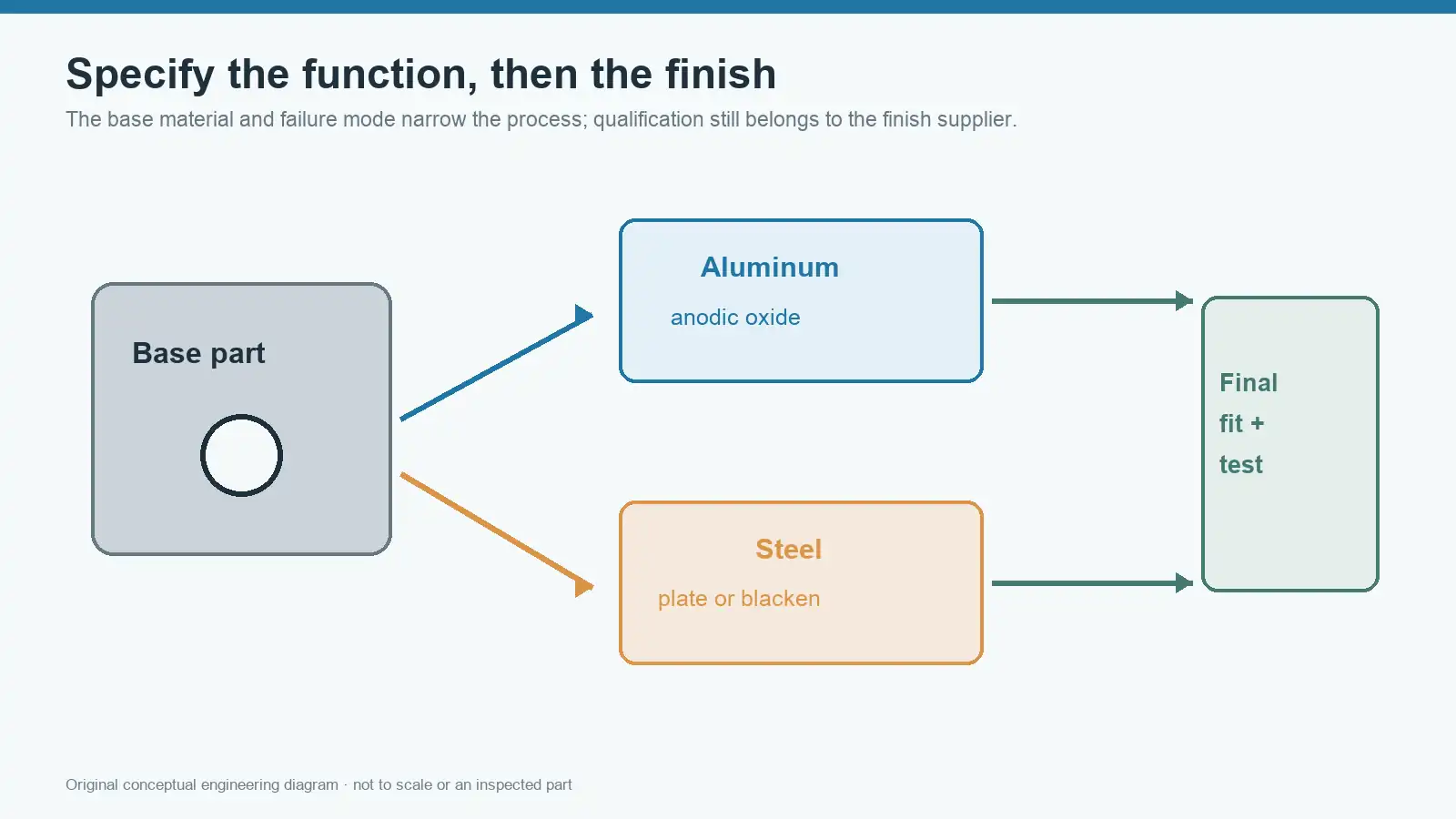
The useful drawing note is specific enough to be quoted and inspected, but not so prescriptive that it locks a process variant before the coating specialist reviews the alloy and service condition. When the desired performance is not yet quantified, record the unresolved question for engineering review rather than inventing a coating thickness or salt-spray target.