304 and 316L are both austenitic stainless steels used for machined components, but neither is a universal “corrosion-proof” option. The main selection question is what the finished part will encounter: chloride exposure, temperature, crevices, cleaning chemistry, welds, and the consequences of corrosion. 316L's molybdenum generally improves resistance to localized chloride attack relative to 304, while its low-carbon designation matters particularly around sensitization in welded or heat-affected conditions. It does not guarantee performance in every chloride environment. The RFQ should state the exposure and acceptance requirements, not just a grade name. [1][2]
Why the service environment outranks a simple grade ranking
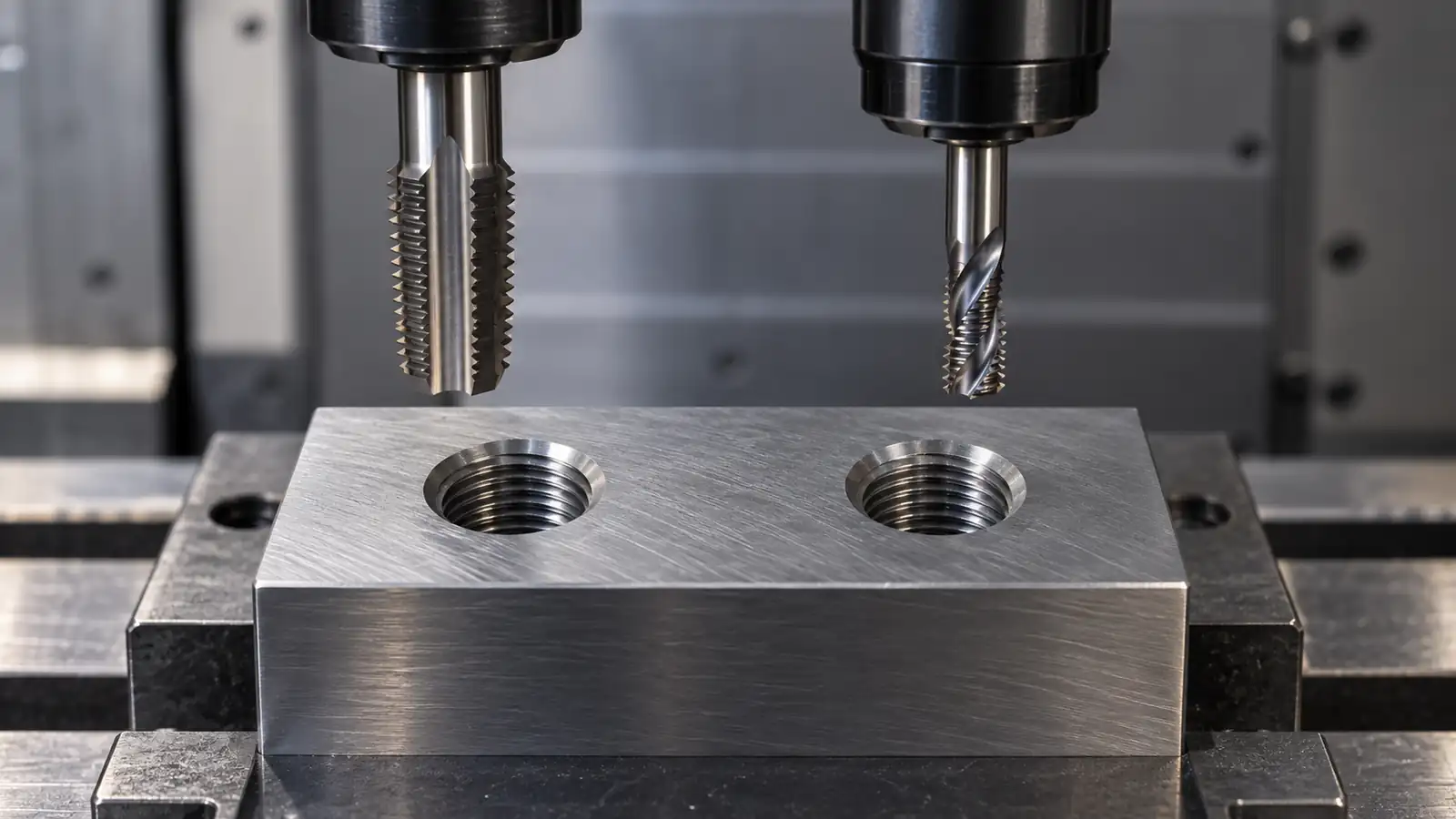
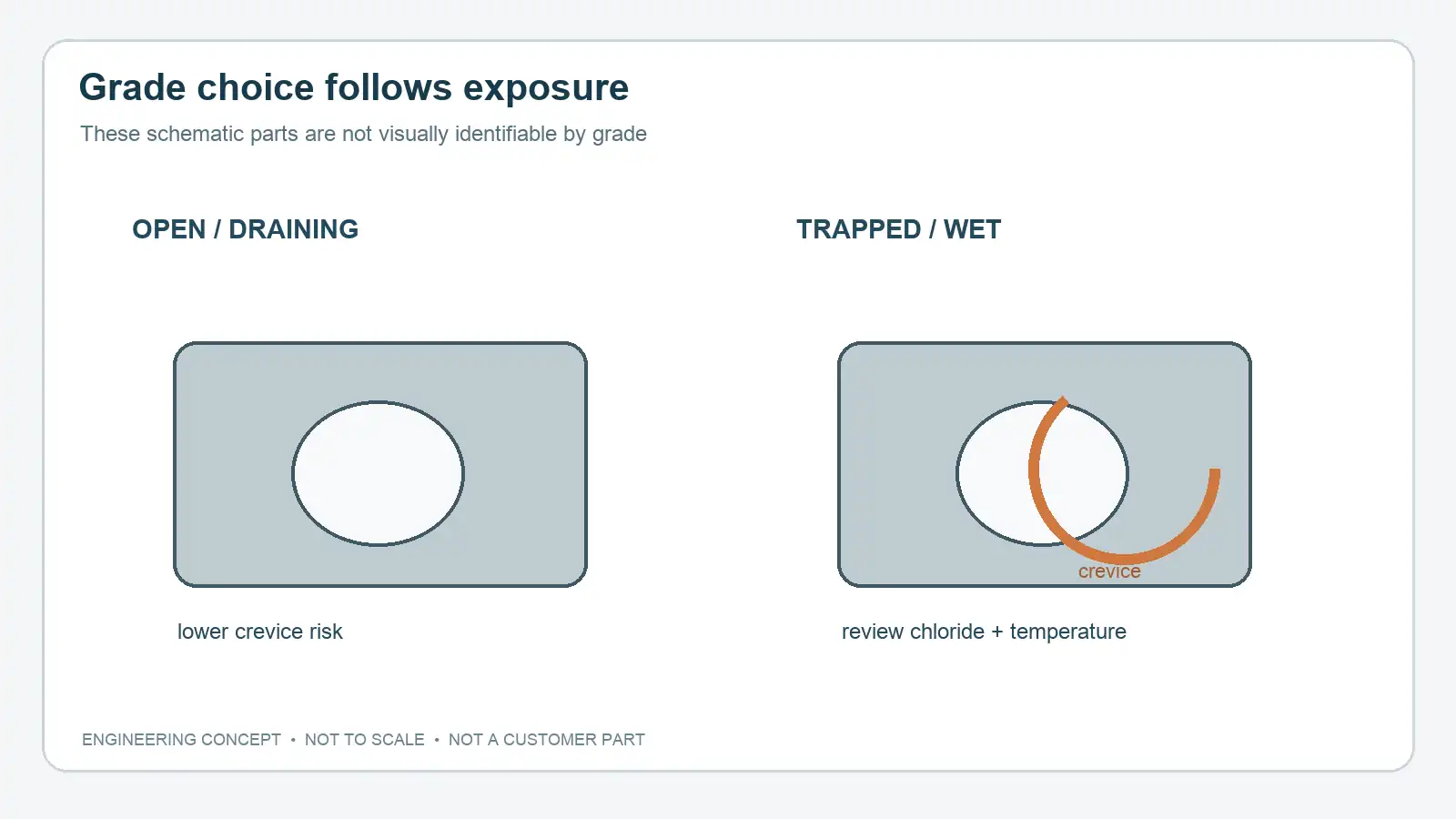
Stainless steel relies on a passive surface film. Local breakdown can cause pitting or crevice attack, especially where chlorides concentrate, liquid stagnates, deposits accumulate, or temperature rises. A free-draining exterior, a threaded pocket, and a trapped gasket crevice can behave differently even if made from the same bar. Worldstainless describes chloride-driven localized corrosion and the influence of design and environment; the Nickel Institute's guidance similarly treats concentration, temperature, and crevice geometry as interacting variables. Do not transfer a safe limit from a generic table to an untested assembly. [1][3]
If the part is used in an aggressive or safety-critical service, material choice may require a corrosion specialist, qualification testing, or a different alloy family. “Marine grade” is an imprecise shorthand, not a test specification. For noncritical indoor hardware with modest exposure, 304 may be appropriate; for chloride-bearing service, 316L may offer a useful margin, but the actual environment still decides. These are screening directions, not unconditional material recommendations.
What the L means—and what it does not
The “L” denotes a lower-carbon variant. Lower carbon reduces the tendency toward chromium-carbide sensitization during welding or certain thermal exposures, which can otherwise weaken resistance near heat-affected regions. It does not mean the part is inherently stronger, easier to machine, nonmagnetic under all processing histories, or immune to pitting. If the component is not welded, 316L may still be selected for its overall 316-family corrosion characteristics or because the approved material specification calls for it. Confirm the exact grade and product form instead of substituting 316, 316L, or 304 based on a casual name. [2]
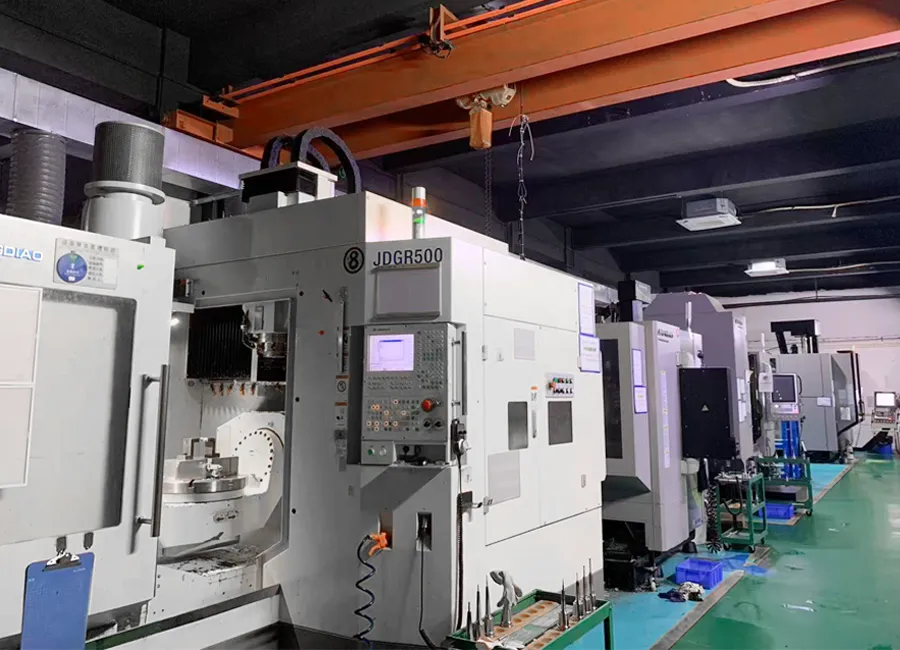
For a CNC-machined part, machinability, burr behavior, workholding, heat, and tool wear are process-planning issues for both grades. Actual cycle time and surface outcome depend on stock condition, geometry, tool strategy, and quantity. Avoid assuming a fixed price premium or lead time without a drawing and current supply quotation. If the part must weld, specify the weld procedure and post-weld acceptance separately from the raw bar callout.
Specify product form, traceability and surface state
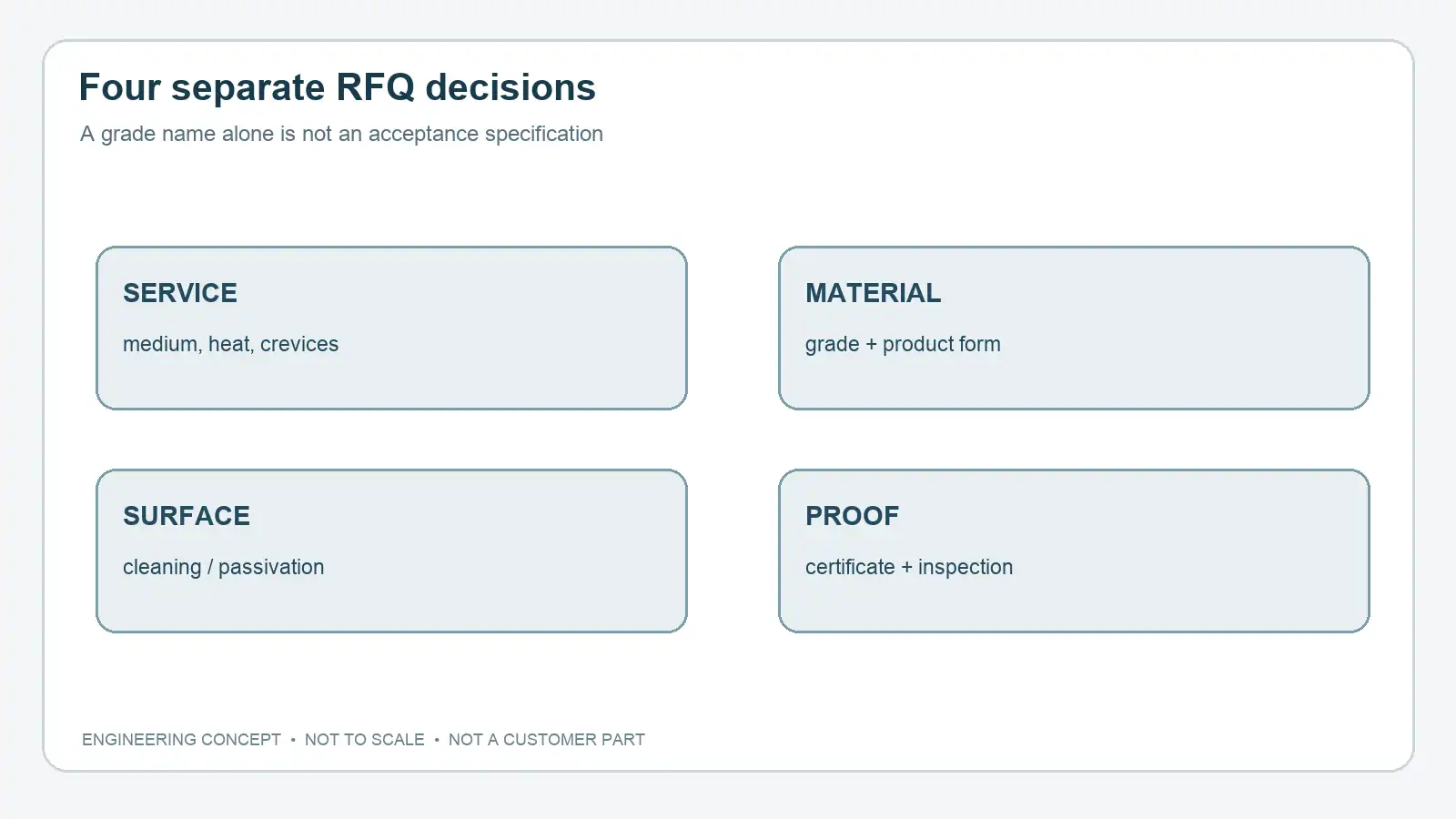
The material line should include grade, applicable product-form specification and revision, stock condition when relevant, and certificate/traceability requirements. ASTM A276/A276M-25 addresses stainless bars and shapes; ASTM A240/A240M-26 addresses chromium and chromium-nickel stainless plate, sheet, and strip for specified applications. These are not interchangeable just because both can be machined. Confirm the purchase specification with the actual stock form and end-use. [4][5]
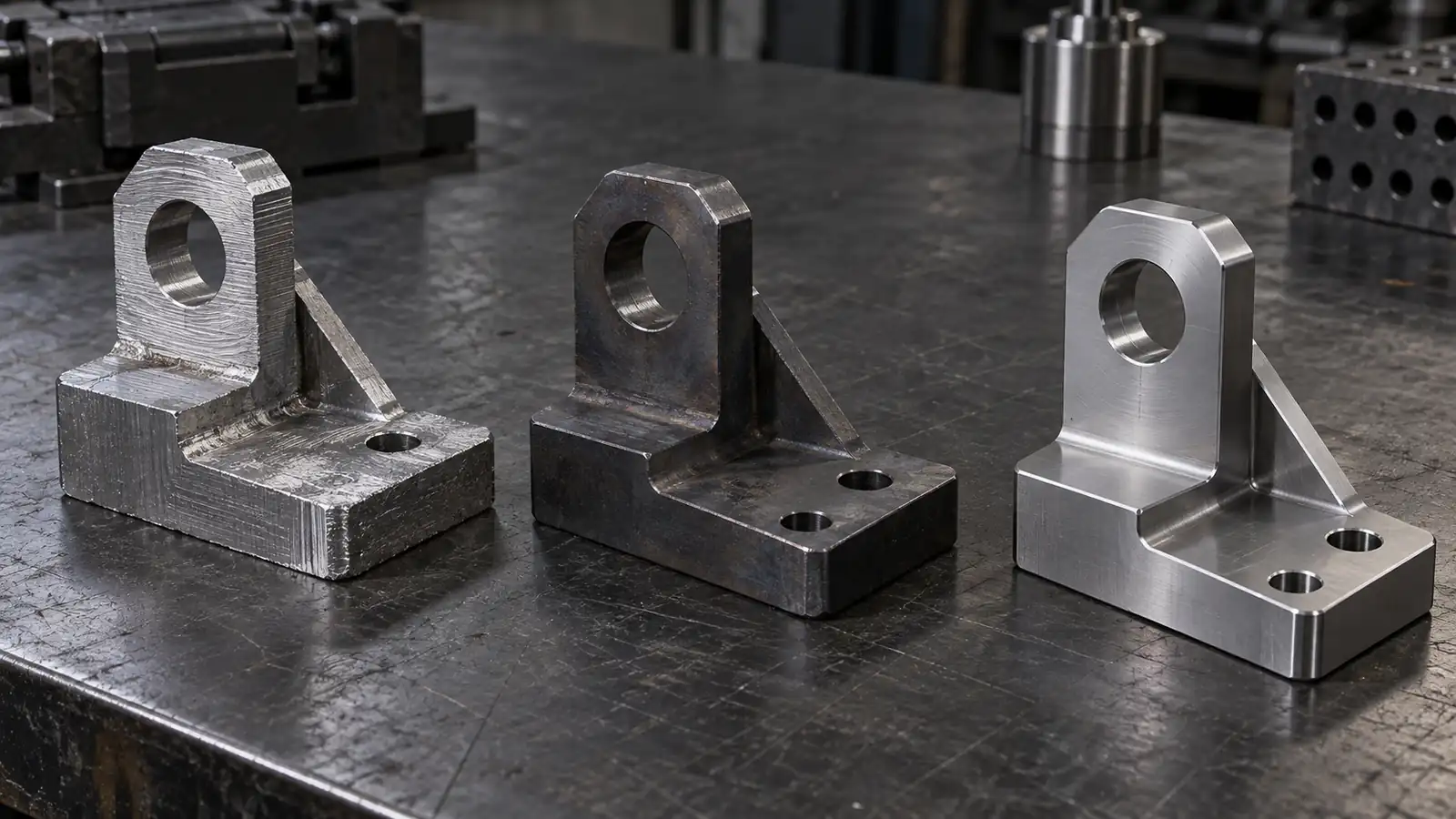
Surface condition is a separate decision. Machining can leave heat tint, embedded foreign iron from handling, or areas difficult to clean; welding adds its own heat-affected surface. If passivation is specified, name the applicable standard and the required treatment/verification class or agreed acceptance tests. ASTM A967/A967M-25 covers chemical passivation treatments and alternative qualitative effectiveness tests; it does not choose the correct corrosion system for the designer. Cleaning, finishing, and passivation should be compatible with the assembly and any coating, seal, or dimensional requirement. [6]
Inspect what matters to the application. A cosmetic satin finish is not proof of grade or corrosion resistance. If the part has sealing faces, bores, threads, or crevices, identify their roughness/cleanliness and which areas must remain free of residue after processing. For traceable work, define the level of material certificate and lot identification before the stock is cut; recreating traceability afterward is unreliable.
An RFQ decision sequence
- Describe the medium, chloride source if any, temperature range, wet/dry cycling, cleaning chemicals, exposure duration, and trapped-fluid locations.
- Identify welded or thermally affected zones and whether the final part has crevices, gaskets, threaded pockets, or inaccessible passages.
- State the approved material grade and product-form specification—or ask suppliers to quote controlled alternatives for engineering review.
- Define surface finish, cleaning/passivation method, certificate, and how acceptance will be verified.
- Separate material selection from machine-shop capability: ask for a quote against the complete drawing and quantities, then review process and procurement trade-offs.
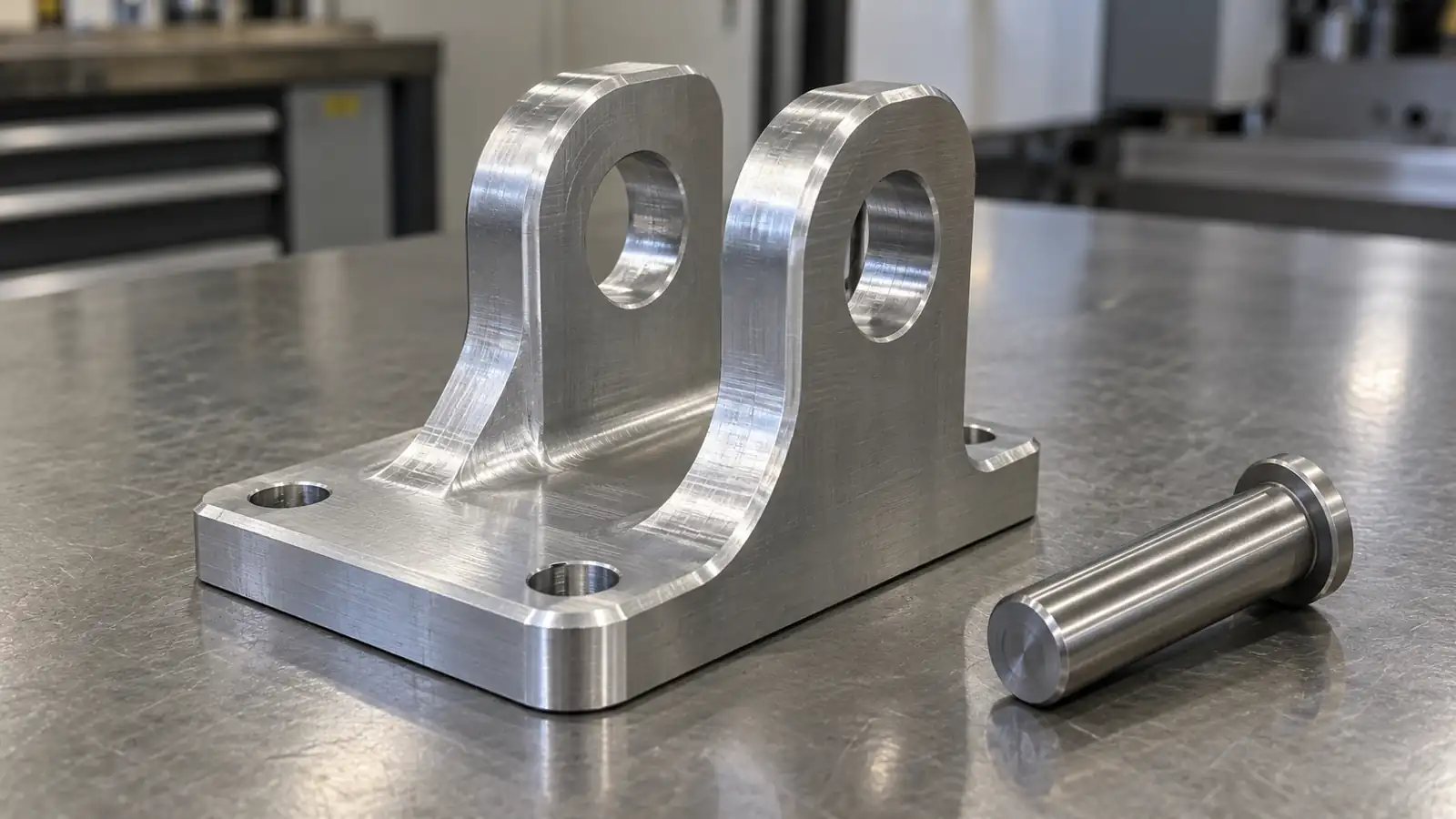
Suppose an indoor bracket and a washdown valve component share the same simple turned geometry. Their exposure, crevice, and cleaning conditions are not the same; copying the bracket's 304 callout to the valve because the parts look alike is not a sound decision. Conversely, changing every indoor part to 316L without an exposure rationale may add procurement constraints without solving a defined problem. This is a hypothetical comparison, not a JIZAO customer case or performance test.
Bottom line
Choose 304 or 316L against a documented service environment and product-form specification. Treat corrosion resistance, fabrication, surface treatment, and traceability as separate requirements. Where the consequence of failure is significant, qualify the material and finished assembly for its actual conditions instead of relying on the grade name.
Sources
[1] worldstainless, Corrosion Properties — stainless passivity and localized corrosion context.
[2] worldstainless, Austenitic Stainless Steels — alloy-family and low-carbon welding/sensitization context.
[3] Nickel Institute, Guidelines for the Selection of Nickel Stainless Steels for Marine Environments — chloride exposure and crevice/temperature considerations; application-specific, not a universal threshold.
[4] ASTM, A276/A276M-25 — current bar and shape product-form specification record.
[5] ASTM, A240/A240M-26 — current plate, sheet, and strip product-form specification record.
[6] ASTM, A967/A967M-25 — chemical passivation specification and test-method scope.