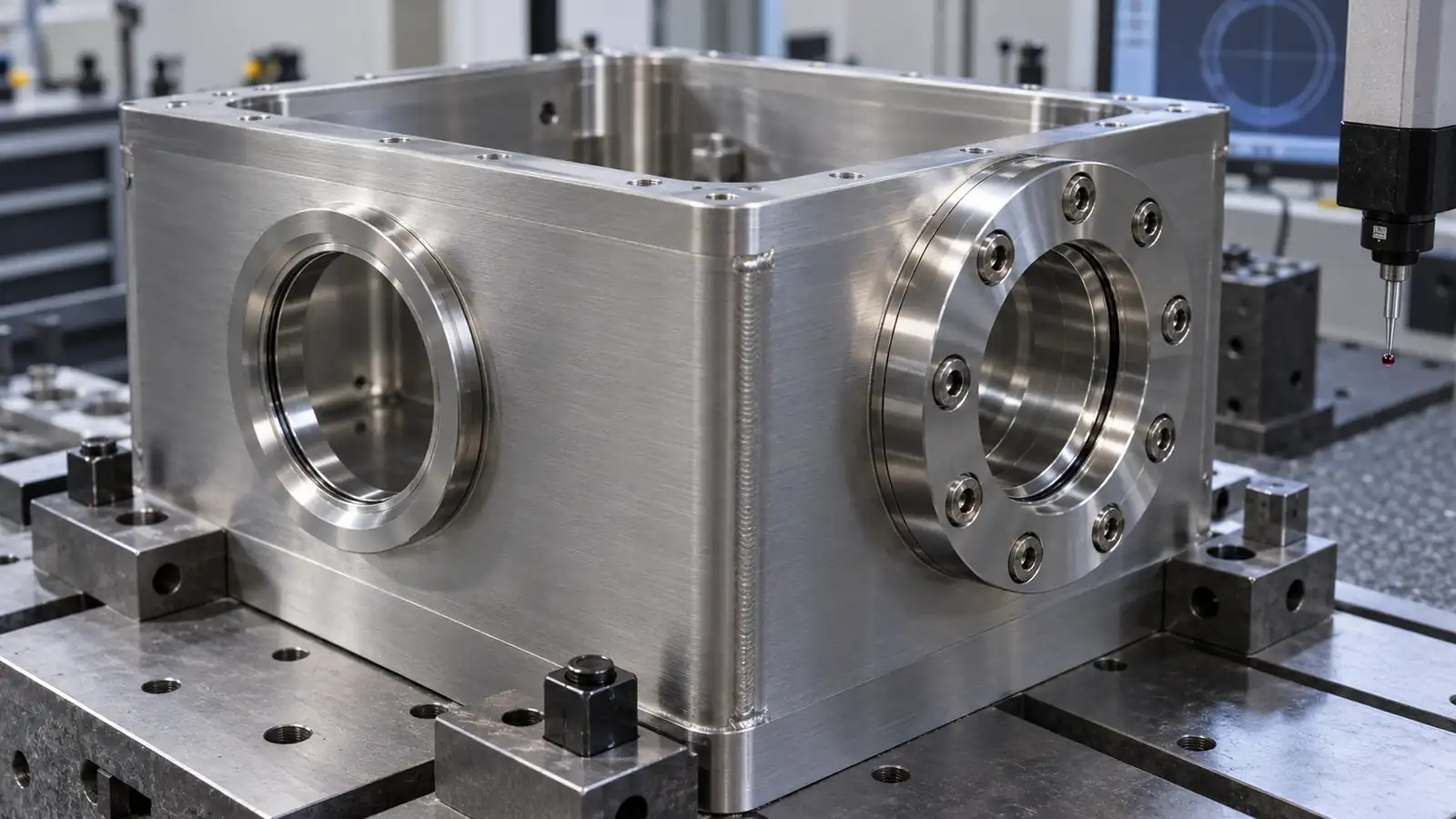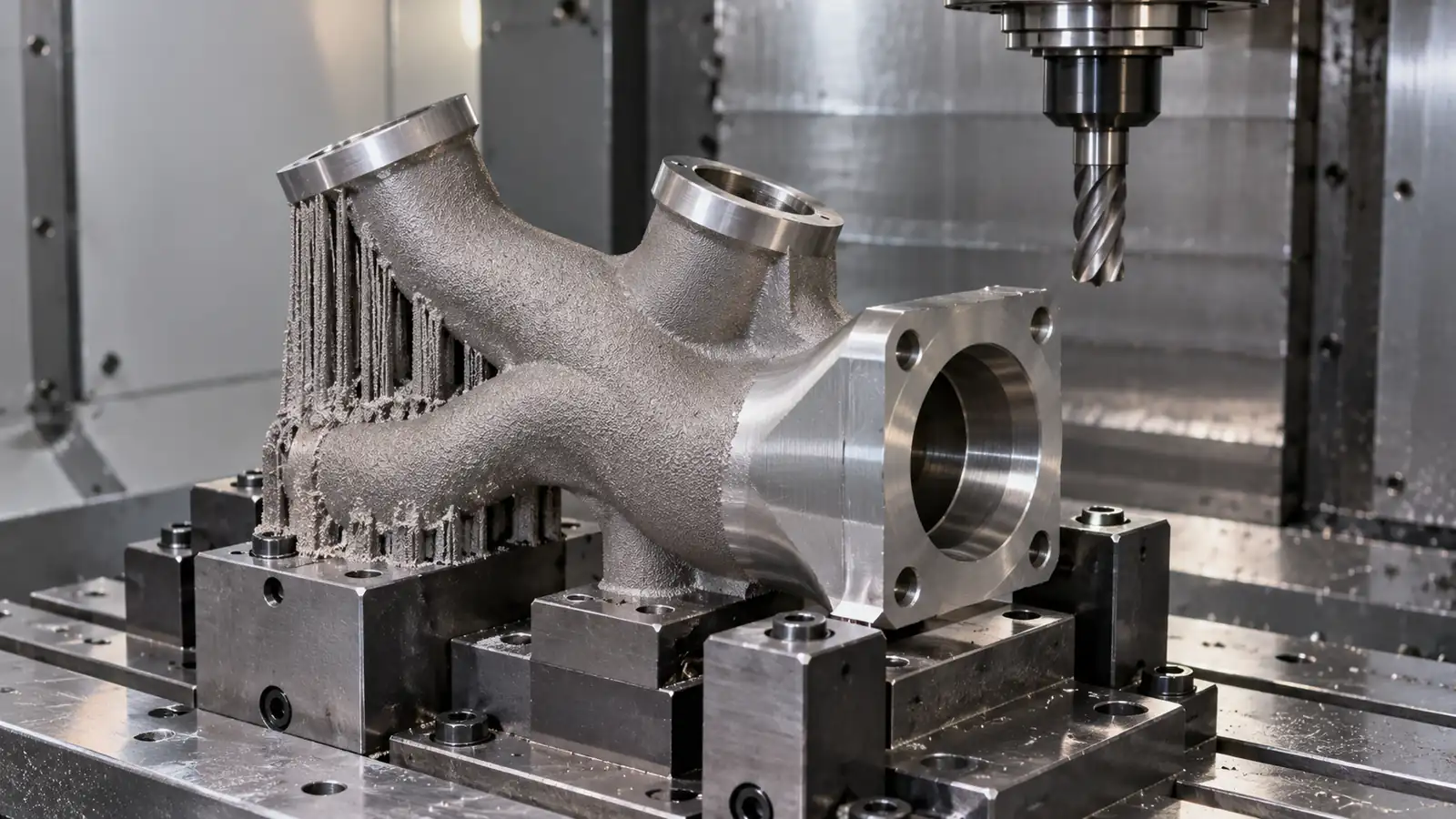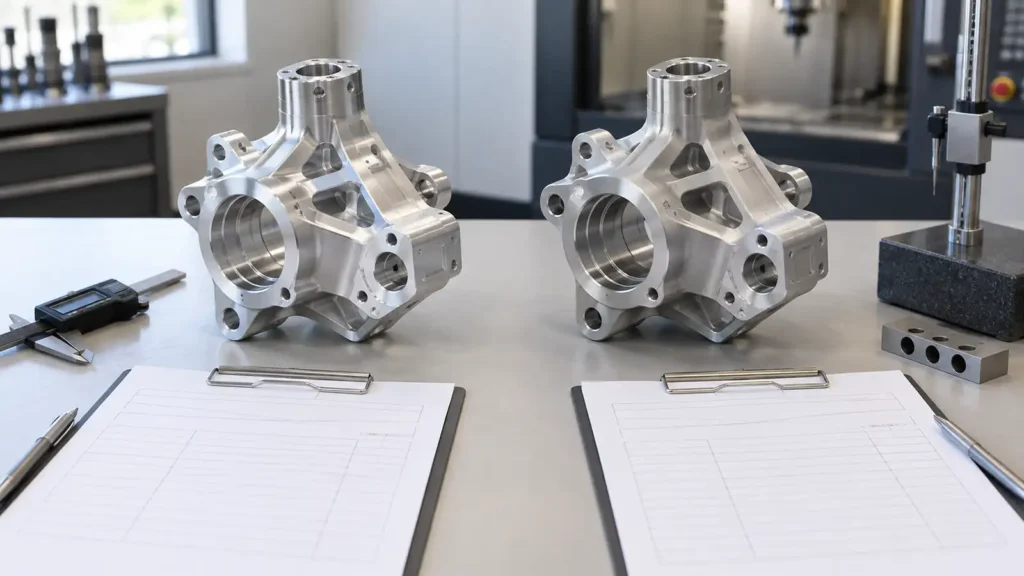
The lowest unit price is not necessarily the lowest-cost quotation for a complex five-axis CNC part. Two shops may have priced different material conditions, inspection scope, finish, scrap assumptions, shipping terms, or revision levels. Make the quotes comparable before choosing a supplier: normalize the requirement set, separate one-time from recurring charges, and price the consequences of missing evidence or rework. A quote is a set of assumptions as much as a number.
Freeze the comparison basis
Send each supplier the same controlled model and drawing revision through an approved channel. Identify the material grade and condition, finish specification, quantity at each release, total forecast if meaningful, destination, required inspection record, and requested delivery date. Note whether the 3D model or 2D drawing controls a particular feature, and resolve contradictions before the quote is accepted. Do not assume a supplier will treat an unlabeled model note as binding.
If you have not yet approved a secure transfer route for proprietary files, use a redacted capability inquiry first. Do not attach controlled customer drawings to an ordinary contact form just to accelerate a budget quote. Distinguish a budgetary estimate from a firm, revision-specific offer in your comparison sheet.
Separate setup, unit, and external-process costs
Ask for a line-item structure: nonrecurring programming and fixturing, piece price at each quantity break, material, external finishing, inspection or first article, packaging, and freight. A setup charge may be sensible for low volume; folding it into unit price can make a short run appear expensive and a repeat run appear cheap. Compare total spend at the quantity you will actually order, then ask how pricing changes for future releases.
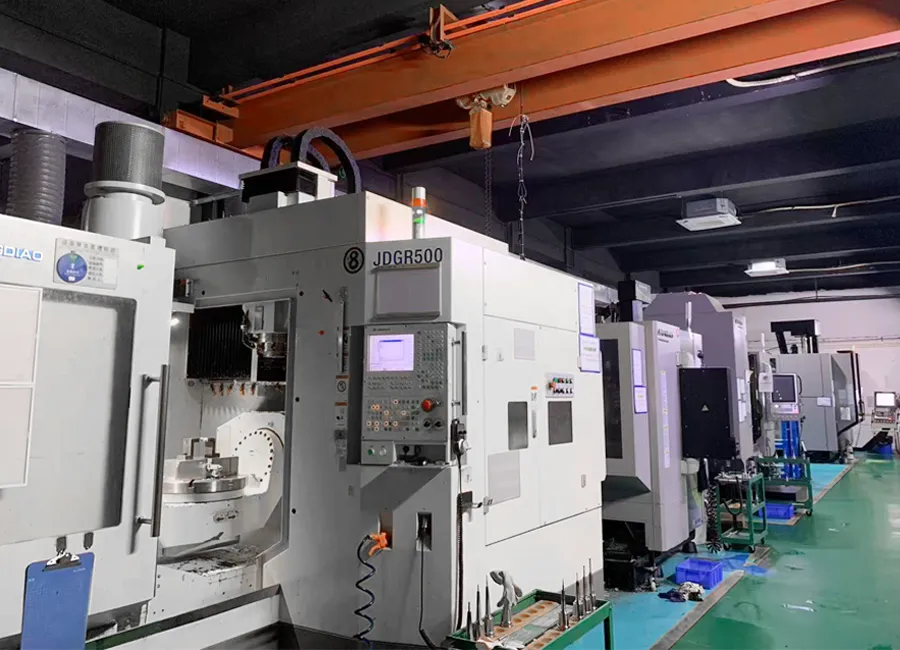
For five-axis work, machine time is only part of the cost. Complex workholding, long-reach tooling, verification of cross-face relationships, and sacrificial stock can matter more than the axis count. A shop may propose a 3+2 indexed approach, simultaneous motion, or a mixed route. Treat these as process choices that must satisfy the drawing, not as price categories with an automatic quality ranking.
Normalize the technical scope
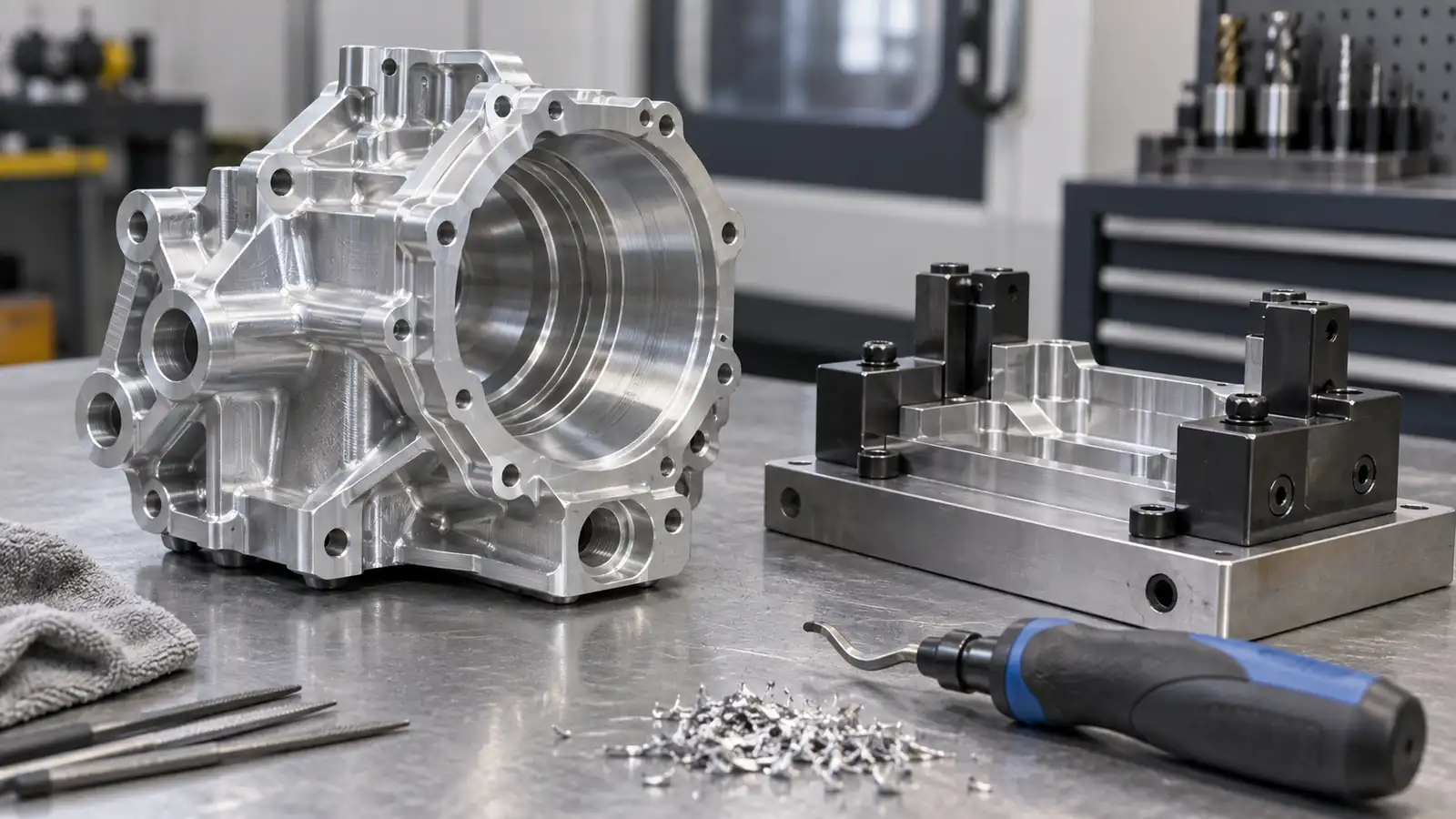
Create a single comparison table with one row per requirement that can change a price or a delivery date. Include stock condition, datum and tolerance interpretation, surface finish, edge requirements, threads, masked zones, coating state at acceptance, inspection sample size, report format, and packaging. Mark each response as included, excluded, assumed, or needs clarification. “Included” is meaningful only when the supplier's quote references the correct revision and acceptance state.
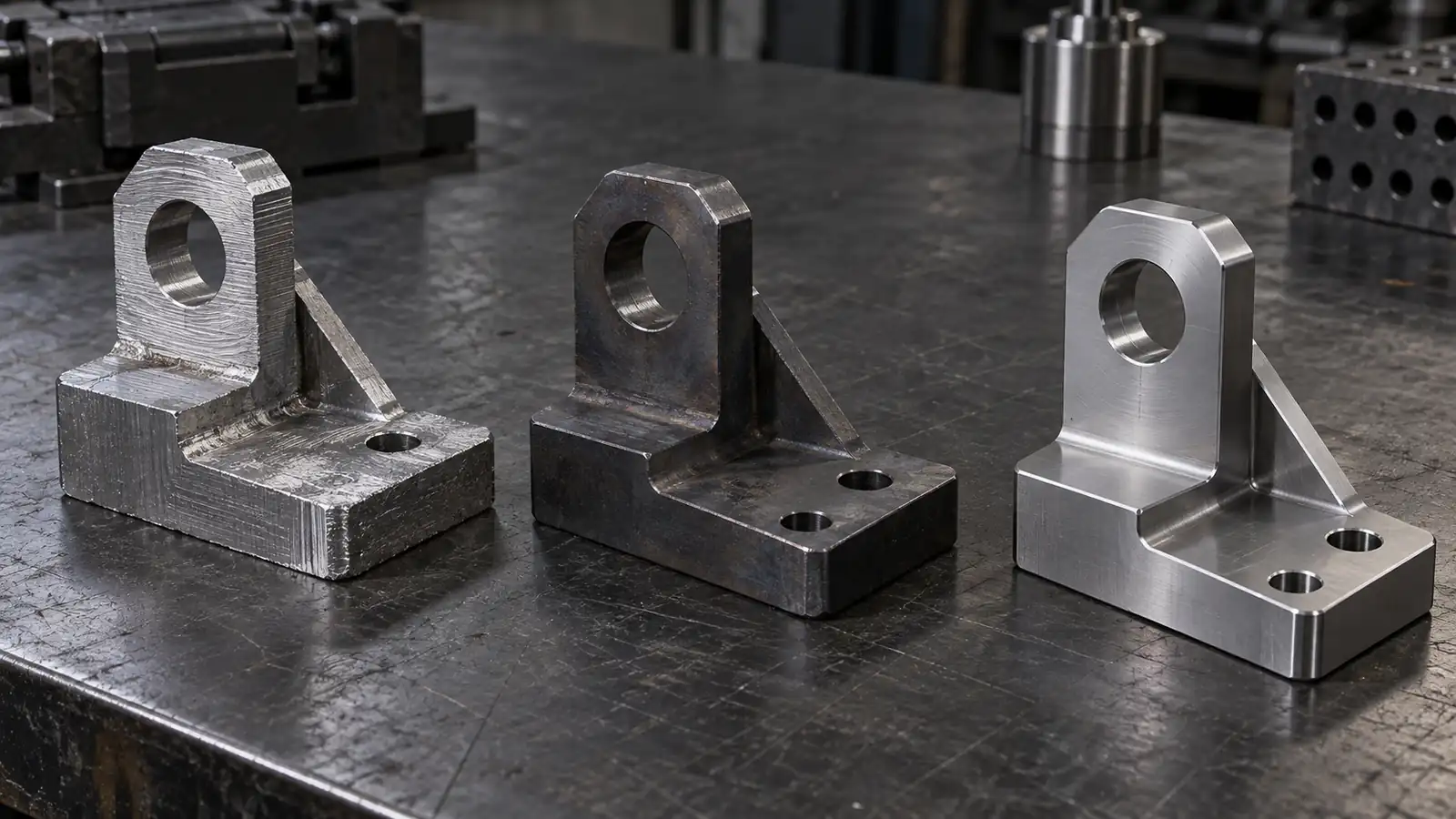
Pay attention to drawing notes that seem minor. A requirement to inspect a deep bore after finishing may need a different method than measuring it at the machine. A cosmetic requirement on every surface is different from a functional surface-texture callout. If a supplier excludes a critical feature from the inspection report, its lower price is not comparable to a quote that includes the evidence.
Ask what will happen if the design changes after quote acceptance. A revised drawing can invalidate toolpaths, fixture locations, purchased material, outside-process instructions, and inspection programs. Agree on a change quotation and schedule-review route rather than assuming that a “minor” CAD edit is cost-free.
Compare lead time by milestones
“Three weeks” may mean three weeks after purchase order, drawing clarification, material receipt, sample approval, or finish-processor release. Ask for an explicit starting event and milestones: DFM questions closed, material confirmed, program and fixture ready, first part measured, outside finish returned, final inspection complete, and shipment. This exposes the critical path and the buyer approvals that can delay it.
For repeat orders, distinguish first-run lead time from reorder lead time. Stored programs do not guarantee stored material or available machine capacity. Ask whether the shop will hold stock, fixtures, or gauges and who pays for that inventory. A faster quote can still be fragile if it depends on an unconfirmed outside process or assumes the buyer will waive inspection.
Evaluate commercial exposure without invented “industry prices”
There is no universal acceptable price for a complex five-axis part. Material, buy-to-fly ratio, tolerances, machine access, finish, quantity, labor market, and risk allocation differ. Compare a landed-cost scenario using the actual quoted figures and your own costs for incoming inspection, freight, duties where applicable, and approval labor. Keep assumptions visible. If you lack a value, mark it unknown instead of inserting a market-average number.
The decision can also include the cost of a failed first article, a delayed integration test, or a second-source qualification. These are buyer-specific risk estimates, not evidence that a supplier will fail. A quote with a clear technical review and realistic inspection package may have a better risk profile even if its unit price is higher. Conversely, a premium quote without a clear scope is not automatically safer.
Questions to close before purchase order
Ask each supplier:
- Which revision and files are your quote based on?
- Which dimensions, finishes, tests, and reports are included, and at which process stage?
- Which assumptions could change price or lead time?
- Which work is subcontracted, and who owns acceptance after it returns?
- What quantity, delivery, packaging, and Incoterms basis does the price use?
- What event starts the lead-time clock, and what buyer approvals are required?
Record answers in the purchase-order attachment or technical agreement where appropriate. Do not rely on an email subject line to carry an acceptance criterion. If a shop cannot resolve an ambiguity before ordering, request a priced option for each interpretation or postpone the purchase decision until engineering releases a clear requirement.
JIZAO can discuss a non-confidential machining requirement, quantity range, and proposed inspection scope before any controlled-file transfer. Ask for a quote basis that makes exclusions and open technical questions explicit; this is a buyer workflow, not a promise of a particular price, tolerance, or lead time.
Frequently asked questions
Should I always choose the shortest quoted lead time?
No. First confirm its starting event, external-process dependencies, sample-approval gate, and final-inspection scope. A shorter number based on missing work is not an equivalent offer.
Is a five-axis quote always more expensive than a three-axis quote?
No. Total cost depends on setups, fixturing, cycle time, feature access, inspection, and batch size. Compare feasible process routes against the same accepted drawing.
How should I compare a prototype quote with a production quote?
Separate nonrecurring engineering and first-run learning from repeat unit economics. Ask for quantity breaks and the change-control assumptions that apply after prototype approval.
Reference
- ASME Y14.5-2018 (R2024), Dimensioning and Tolerancing, for the drawing-system context when applicable. Pricing and lead-time examples in this article are decision questions, not benchmark claims.