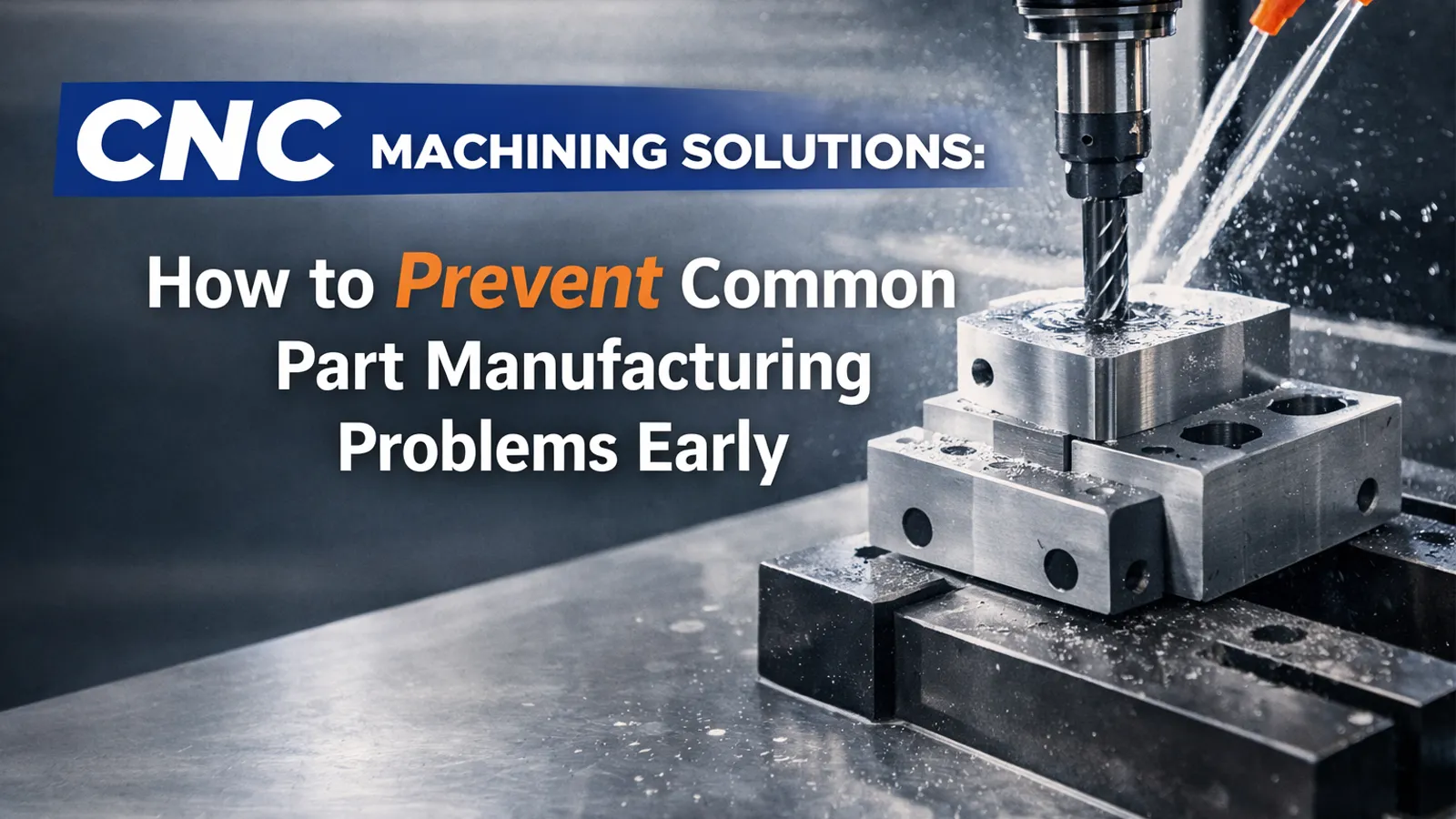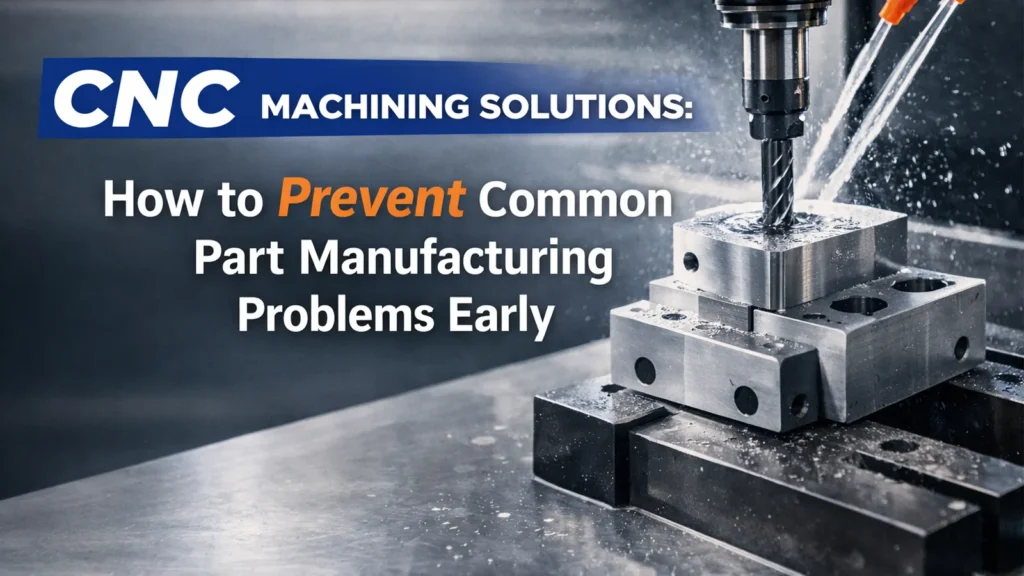
In CNC machining, many quality, cost, and delivery problems do not begin on the machine. They begin much earlier, during part design, drawing preparation, material selection, and requirement definition. A part may look straightforward in CAD, but once tolerances are too tight, features are difficult to access, or key specifications are missing, the result is often rework, longer lead time, and unnecessary cost.
The most effective way to reduce machining risk is to identify these issues before production starts. Early engineering review helps detect manufacturability problems, align design intent with process capability, and improve the chance of stable, repeatable production. For prototypes, small-batch runs, and mass production alike, preventing problems early is usually faster and less expensive than correcting them later.
Why Early Prevention Matters in CNC Machining
A machining project usually fails for predictable reasons. Dimensions may be harder to hold than expected. Internal corners may be too sharp for available tooling. Surface finish requirements may conflict with part geometry or material behavior. Drawings may define critical dimensions incompletely, or 3D models may not match the released print.
When these issues are discovered late, the impact spreads quickly. Programming becomes less efficient. Tool access becomes limited. Inspection becomes more difficult. In some cases, the part can still be made, but only with added setups, special tooling, slower cycle times, or secondary operations. Early review reduces these risks by resolving them before they affect cost, schedule, and quality.
1. Tolerance Requirements That Add Unnecessary Cost
One of the most common causes of machining difficulty is over-specification. Not every dimension needs the same tolerance, yet many drawings apply tight limits across the entire part. This increases machining time, inspection effort, and process risk without always improving function.
Tolerances should reflect actual design intent. Critical fits, sealing surfaces, bearing locations, and assembly interfaces may require close control. Other non-functional features often allow wider limits with no effect on performance. Separating critical dimensions from general dimensions helps improve manufacturability and reduces unnecessary process control.
A practical approach is to review each tolerance and ask a simple question: does this feature directly affect part function, assembly, or performance? If the answer is no, the tolerance may be tighter than necessary. This is one of the fastest ways to lower cost and improve production stability.
2. Geometry That Is Difficult to Machine
A part can be fully defined and still be difficult to manufacture. Deep narrow pockets, thin walls, small internal radii, undercuts, and inaccessible side features often create avoidable machining challenges. These features may require long tools, reduced feeds, additional setups, or specialized machining strategies.
For example, an internal corner radius smaller than the cutter radius cannot be produced directly by standard milling. A deep cavity with limited tool clearance may lead to chatter, deflection, or poor surface finish. Thin walls may move during machining, making dimensional control more difficult. Even when these features are technically possible, they often increase risk and cost.
Good DFM practice means adjusting geometry to suit the process where possible. Adding realistic internal radii, reducing excessive depth-to-width ratios, strengthening thin sections, and improving tool access can make a major difference. The goal is not to simplify the part unnecessarily, but to match the design more closely to practical machining conditions.
3. Material Selection Problems That Affect Machinability
Material choice has a direct effect on machining performance, tool life, dimensional stability, and finished-part quality. A material that is correct from a design perspective may still introduce manufacturing challenges if machinability, heat generation, burr formation, or distortion are not considered early.
Some materials cut cleanly and predictably. Others are tougher, more abrasive, or more prone to work hardening. Certain aluminum alloys are efficient for precision machining, while some stainless steels require more conservative processing and closer attention to tool wear. Plastics also vary widely. Some machine well, while others may deform, absorb moisture, or respond poorly to heat.
Material selection should therefore balance mechanical requirements with manufacturing practicality. If the design permits multiple material options, early review can help identify the one that best supports cost, lead time, and dimensional consistency.
4. Drawing and Model Issues That Cause Delays
Many production delays are not caused by machining difficulty alone, but by incomplete or conflicting technical information. Common problems include missing tolerances, undefined surface finish expectations, unclear datum structure, mismatch between 2D drawing and 3D model, and unspecified thread standards or edge-break requirements.
From a manufacturing perspective, unclear documentation creates uncertainty. That uncertainty slows quoting, process planning, programming, and inspection. In the worst case, it also creates a risk that the finished part will not match the customer’s actual design intent.
A strong technical package should clearly define material, quantity, critical dimensions, tolerances, finish requirements, and any special notes relevant to function. When drawings and models are aligned, the engineering review becomes faster and the project can move into production with fewer questions and fewer revisions.
5. Surface Finish and Secondary Process Risks
Surface finish requirements are often treated as final details, but they should be reviewed at the beginning of the project. Cosmetic expectations, roughness values, coating requirements, masking zones, and post-machining treatments can all affect process choice and dimensional outcome.
For example, a machined finish requirement may call for a different tooling approach than a cosmetic appearance requirement. Secondary processes such as anodizing, plating, bead blasting, or heat treatment may also affect dimensions, edge condition, or surface appearance. If these requirements are not considered early, the part may meet machining dimensions but still fail final expectations.
The key is to define these requirements clearly before production starts. When finish and secondary processes are confirmed in advance, they can be included in the feasibility review and process plan rather than added as late-stage corrections.
6. How Early Engineering Review Helps Prevent Problems
Early engineering review connects design intent with manufacturing reality. It allows the machining team to assess feature accessibility, workholding strategy, setup sequence, tolerance risk, inspection method, and finish compatibility before material is cut.
This review is especially important for precision parts, 5-axis machining projects, and production programs where repeatability matters. A part may be machinable in principle, but the more important question is whether it can be machined efficiently, consistently, and with an acceptable level of process risk.
When manufacturability concerns are identified early, the customer has more options. Features can be revised. Tolerances can be refined. Materials can be confirmed. Inspection points can be clarified. These decisions are much easier to make before production than after nonconforming parts have already been made.
7. What to Prepare Before Requesting a CNC Machining Quote
A more complete RFQ usually leads to a faster and more accurate engineering assessment. The most useful information includes:
- 2D drawings and 3D files
- Material specification
- Quantity
- Critical tolerances
- Surface finish or appearance requirements
- Any confirmed secondary processes
- Delivery address
With sufficient information, a machining engineer can review feasibility, identify manufacturing risks, and prepare a quotation based on the actual technical requirements rather than assumptions.
Conclusion
Most CNC machining problems are easier to prevent than to correct. Tight tolerances, difficult geometry, unsuitable materials, incomplete drawings, and undefined finishing requirements can all create avoidable risk. The earlier these issues are reviewed, the better the outcome for cost, quality, and lead time.
A strong machining project begins with clear technical information and early engineering evaluation. That is how common part manufacturing problems are identified early, controlled more effectively, and prevented from reaching production.
Suggested CTA
Need a technical review before production? Share your drawings or 3D files, material, quantity, tolerances, finish requirements, and delivery address. A machining engineer will respond within 12 hours, and after receiving sufficient information, a detailed feasibility and quotation assessment can be provided within 24 hours.
The next step I recommend is for you to paste the original article text so I can convert this into a true line-by-line edited version instead of a fresh first-pass rewrite.